
How Does The Pearl Source’s AAAA Compare With Another Seller’s AAA?
The two grades can’t be matched up by the letters alone. Pearl letter grades are set by each seller, there is no universal grading standard, and GIA does not assign A to AAAA grades. An AAAA strand from one seller and an AAA strand from another could be very close in quality, but they could also be quite far apart.
The reliable way to compare is to look past the label. Check what each seller says its grade means, then compare the pearls on the same factors: luster, surface, shape, size, matching and nacre. The Pearl Source publishes its grading criteria for each pearl type, which gives you something concrete to hold another seller’s description against.
Shoppers usually ask this after seeing two similar strands with different grades and prices. When a higher letter grade costs less than a lower one elsewhere, it is reasonable to wonder whether the grades mean the same thing.
They often don’t, because each seller builds its own scale. Scales can also change by pearl type within one seller. At The Pearl Source, AAAA is the top grade for Freshwater, Tahitian and South Sea pearls, while Akoya pearls run from A to AAA, with AA+ between AA and AAA and Hanadama at the top. An AAA Akoya strand and an AAA Freshwater strand from the same seller are graded against different criteria.
A letter grade is a summary of how a seller ranks its own pearls, but it only really becomes useful once you read the definition behind it.
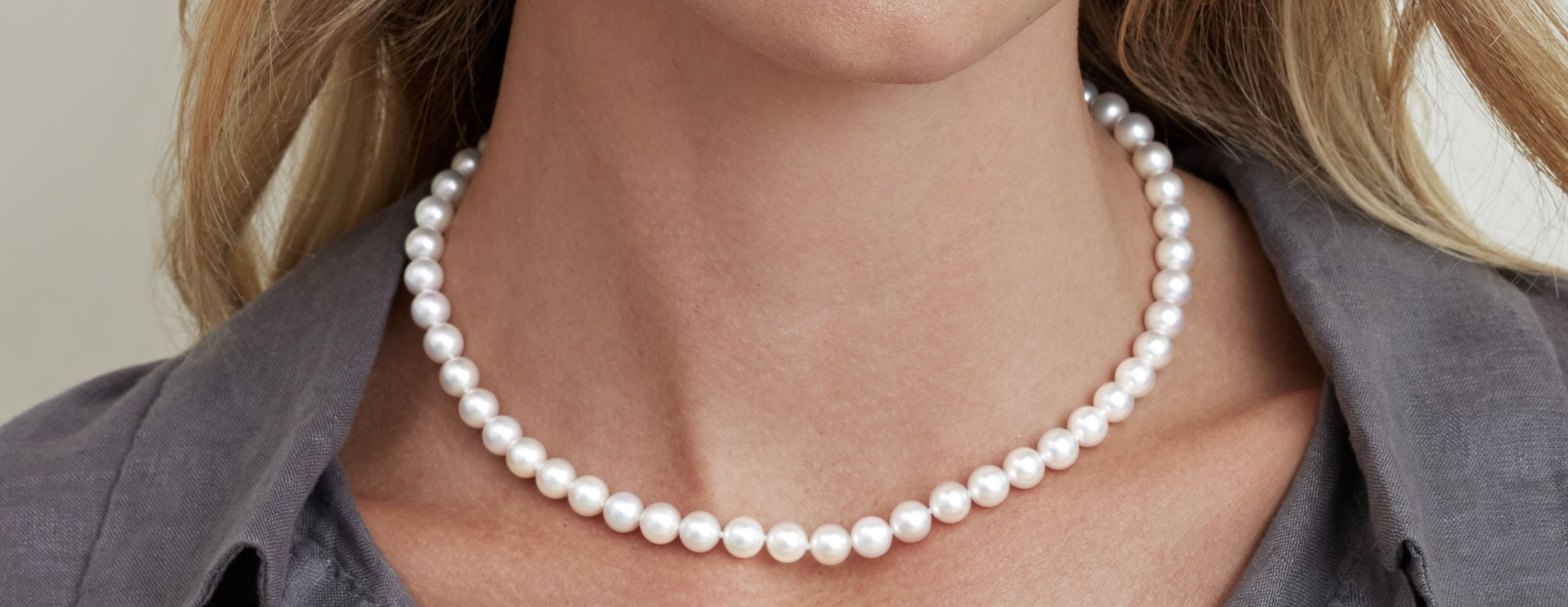
For Freshwater pearls, The Pearl Source defines AAAA as round pearls with very high luster and at least 95% of the surface clean. Its AAA Freshwater grade is near round to round, with high luster and at least 90% of the surface clean. Another seller’s AAA will have its own definition, and that definition is what you compare, not the letters.
A letter grade only means something once you know how the seller defines it. Since two sellers can use the same letters for different standards, compare the pearls themselves on these points before comparing the grades.
No. GIA describes pearl quality using seven value factors: size, shape, color, luster, surface quality, nacre quality and matching. Letter grades such as AAA and AAAA come from sellers.
Within one seller’s scale for one pearl type, a higher grade means higher quality. Across different sellers it doesn’t follow, because each scale is defined differently.
It works differently. The Pearl Source lists Hanadama as its top Akoya quality, and those pearls come with a numbered certificate from the Pearl Science Laboratory of Japan.
Signup now and receive an email once I publish new content.

Content Writer and Editor at The Pearl Source
Katie Muirhead is the editor and primary writer for The Pearl Expert. With a background in fashion and experience creating content for global jewelry brands, she writes practical guides on pearl quality, buying decisions, care, gifting and modern styling. She also contributes pearl education and editorial content for The Pearl Source.
 The Most Versatile Pearl Types