Tahitian Pearl Earrings: How to Choose the Right Color, Size and Style
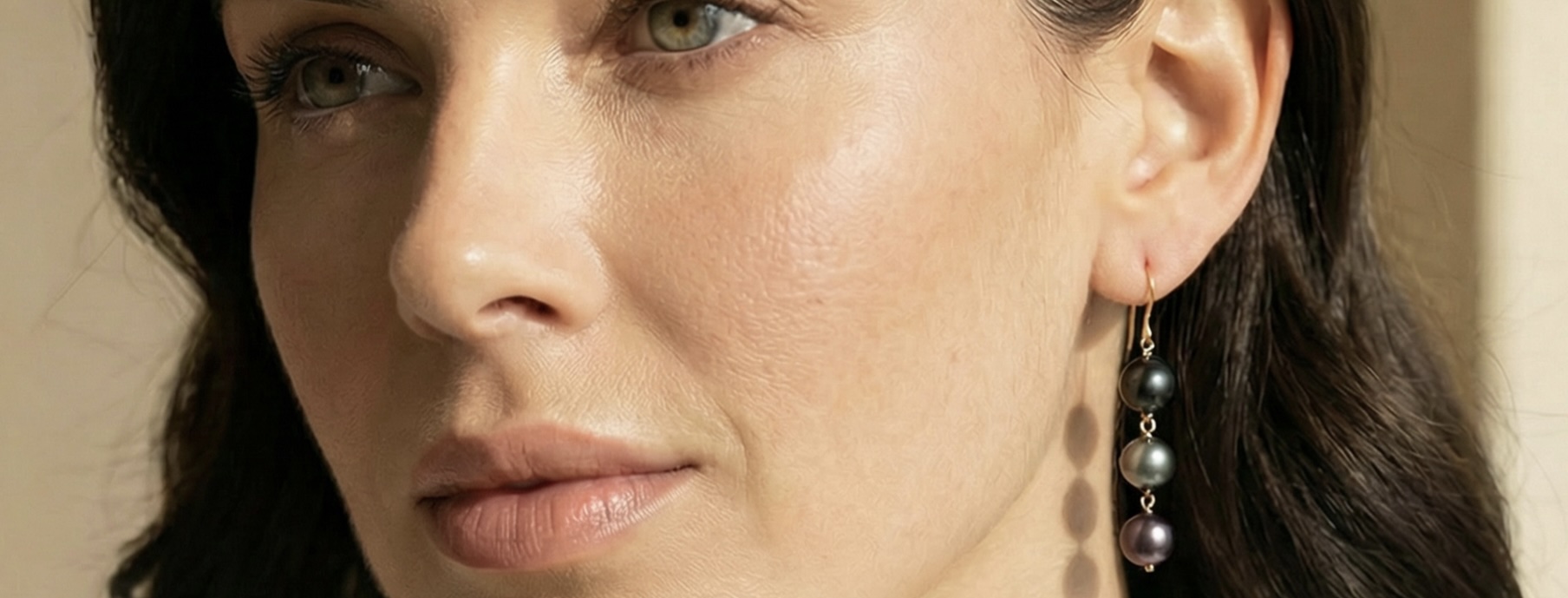
If you’ve started shopping for Tahitian pearl earrings, you’ve probably noticed that no two pairs look quite alike. One might glow silvery grey, another might flash peacock green, and a third might read almost blue-black. That variation is the whole point of the pearl, not an inconsistency in how it’s described.
Tahitian pearls are known for their naturally dark bodycolors and colorful overtones. Choosing the right pair means understanding what you’re looking at, not just picking “the black ones.” This guide covers color and overtone, size, style, shape, metal, and which combination fits everyday wear, a gift, or a statement piece.
Tahitian pearls come from the black-lipped oyster, Pinctada margaritifera, cultivated mainly in the lagoons of French Polynesia. That oyster produces pearls in a wide color range: charcoal grey, deep green, peacock (a green bodycolor with strong multicolored overtones), aubergine, silvery grey, bronze and true black. Our Tahitian pearl color guide breaks each of these down in more depth.
The reverse is also true: not every dark pearl on the market is Tahitian. Freshwater and some Akoya pearls are occasionally dyed to achieve a black or near-black look, and Sea of Cortez pearls are naturally dark too. Neither is a wrong choice, but each is a different product with a different price point, so it’s worth knowing what you’re actually buying. For the fuller picture across all pearl types, see our pearl color guide, and for more on origin, luster and grading, our Tahitian pearl buying guide covers the basics in depth.
Every pearl carries a body color, and many Tahitian pearls also display an overtone and sometimes orient. This is a secondary sheen that plays across the surface, and is usually what catches your eye first.
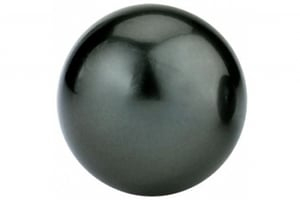
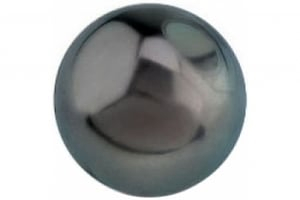
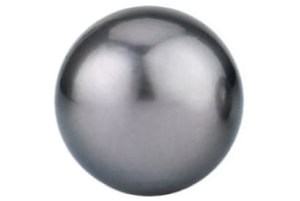
Peacock generally refers to a green body color with a strong overtone — commonly blue, pink, rose, or purple — that reads as rich and jewel-toned. Blue is cooler and more subdued, and pairs well with silver or white gold settings. Silver overtones are bright and reflective and tend to photograph especially well. Aubergine and rose overtones feel warmer and more unexpected, while gold and bronze overtones are rarer and usually command a premium.
Overtone tends to matter more than body color for how the earrings read against your skin. Cooler overtones suit cooler undertones, and warmer overtones like aubergine or bronze suit warmer undertones, though this is a preference rather than a rule. If you’re buying as a gift and unsure of the recipient’s undertone, a pearl with strong green or peacock overtone is usually the safest choice, since it reads as distinctive under most lighting.
Uniformity matters as much as the color itself: a pair with even, well-matched overtone across both pearls will look more polished than a pair with a slightly higher grade but visibly mismatched color.
Tahitian pearls run notably larger than the Akoya or freshwater pearls most people picture when they think “pearl earrings.” Sizes commonly span from about 8mm up to 13mm or more, and that range changes the look substantially.
At 8-9mm, the pearl sits closest to a traditional stud size. It’s the most versatile and understated option, appropriate for the office and usually the most accessible price point in the Tahitian range.
At 10-11mm, you get a comfortable middle ground: enough visual weight to register from across a room without tipping into statement territory. This is also a common size for drop styles, where the extra size adds movement.
At 12mm and up, Tahitian pearls start to feel noticeably luxurious. The natural color variation and luster become more dramatic at this size, and the earrings read as a deliberate style choice. This is the range worth considering for statement studs or anyone who wants their earrings to be the focal point of an outfit.
If you’re new to Tahitian pearls, trying a few sizes on in person, or at least against a photo of your face shape and hair length, makes a real difference: the same pearl size can look completely different depending on your frame. Our Tahitian pearl size guide has more detail on how size relates to value and rarity.
Style affects both how the earrings wear day-to-day and how formal they read. The right format often comes down to how much movement, sparkle or simplicity you want from the piece.
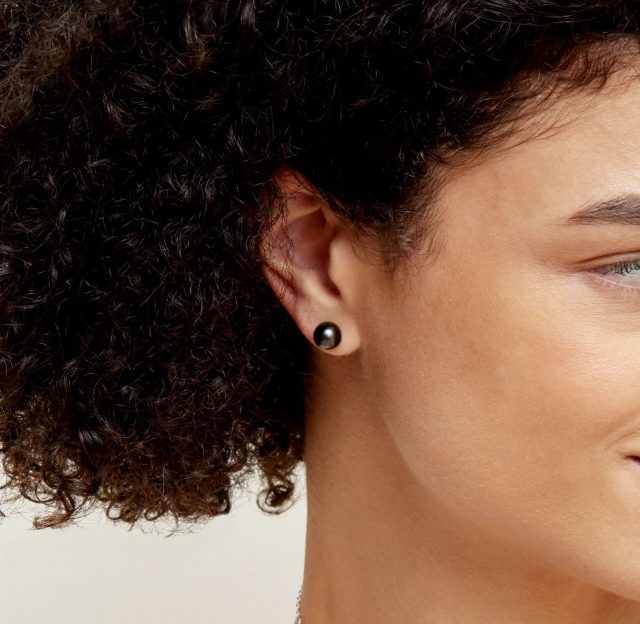
Tahitian pearl stud earrings are the classic entry point: a single pearl on the lobe, letting color and luster do the talking. They’re available from 8mm through 13mm in silver, white gold or yellow gold, and they’re what most people reach for when they want something to wear daily without thinking about it.
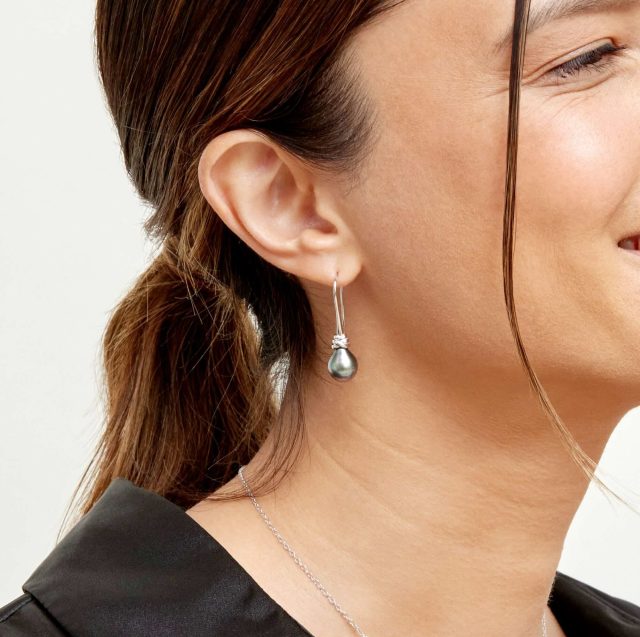
Tahitian pearl drop earrings add movement, with a pearl hanging below the lobe in designs ranging from a simple single-pearl drop to teardrop and dangling tincup styles. They elongate the neck and catch light as they move, which suits evening wear especially well.
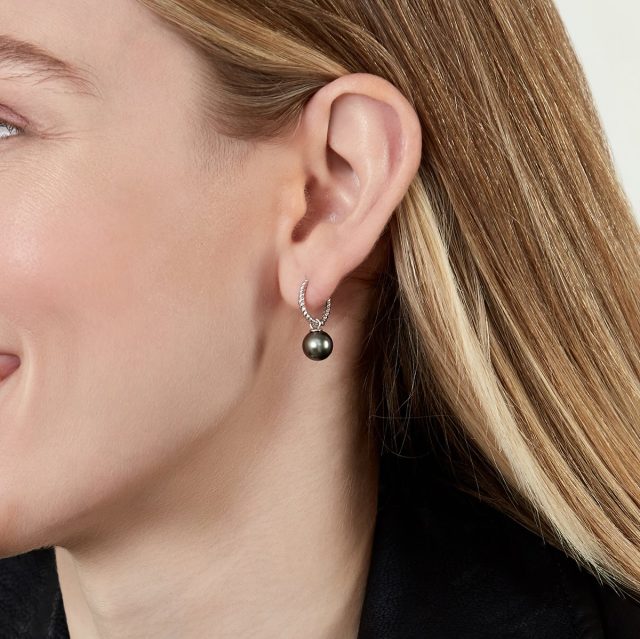
Tahitian pearl hoop earrings are the more contemporary option, from small huggie hoops set with pearls to hoops with a pearl accent at the base. They skew fashion-forward and sit close to the ear, making them practical for daily wear too.
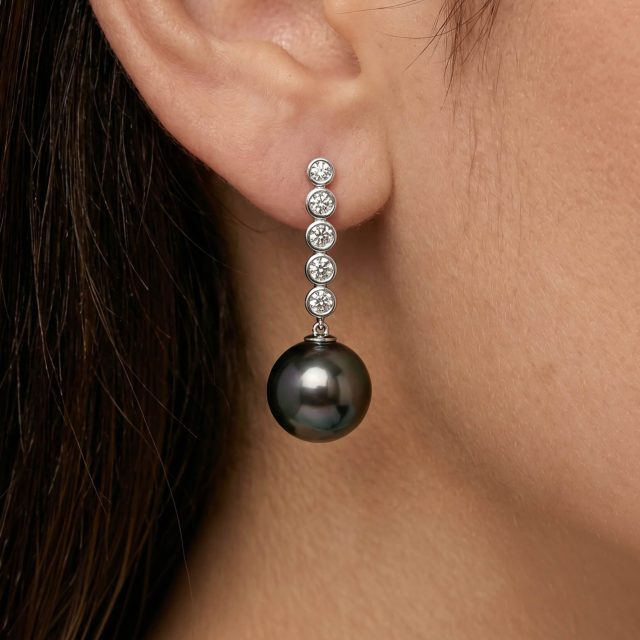
Tahitian pearl earrings with diamonds step things up formally, whether that’s a halo around the pearl or diamonds scattered along a leverback closure. These tend to be the go-to for anniversaries, milestone birthdays, or anything meant to read as fine jewelry.
For more on how earring styles and closures work in general, our types of earrings guide covers the mechanics beyond what’s specific to Tahitian pearls.
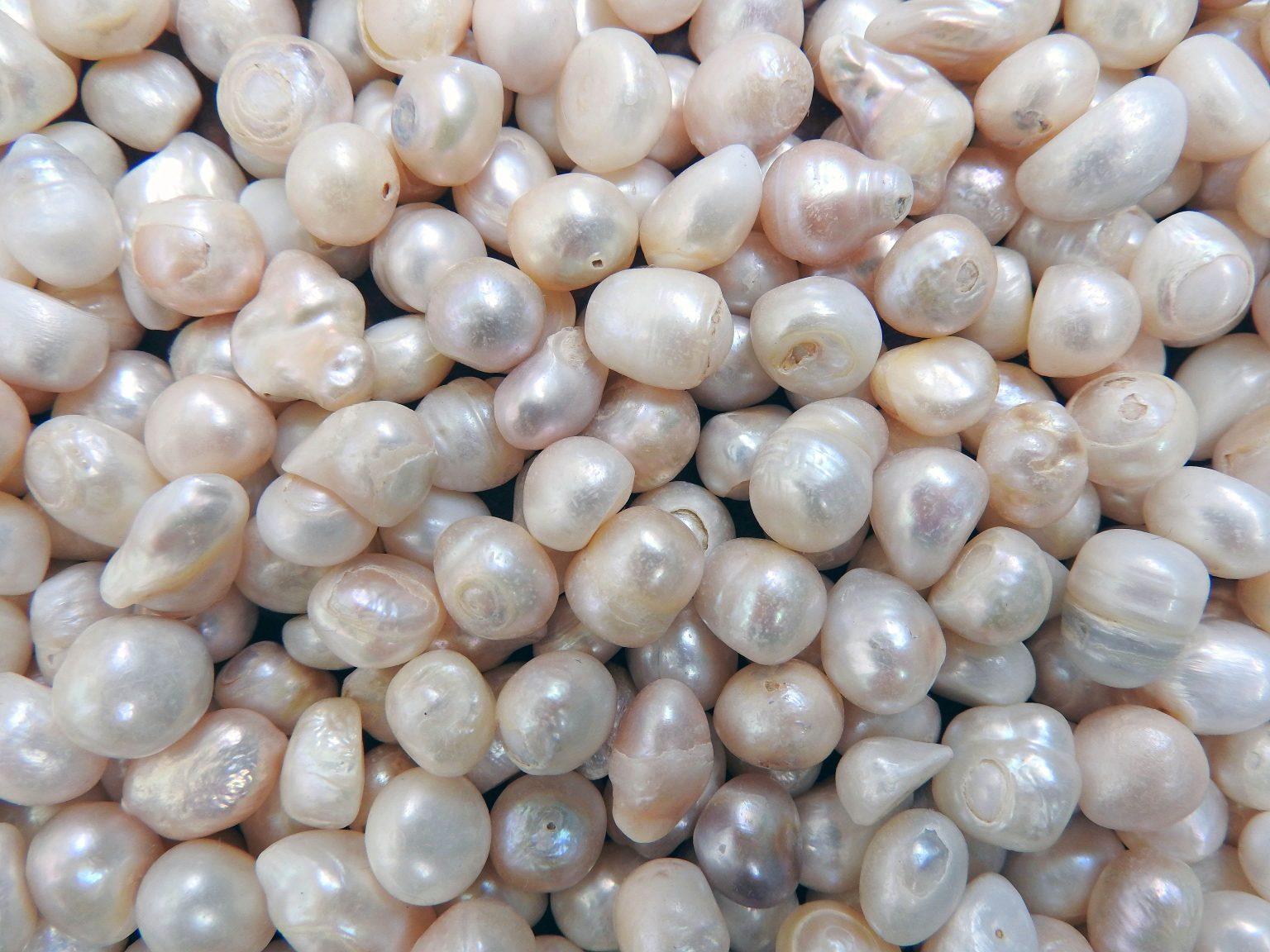
Shape matters more with Tahitian pearls than with most other types. The range of natural shapes is unusually wide, spanning perfectly round pearls all the way to dramatically irregular baroque forms, and that range has a real effect on both price and personality.
Round and near-round pearls are the most classic and traditionally the most valuable. In fact, perfectly round pearls are rarer and generally more valuable when the other quality factors are equal. If you want a timeless look, one that reads as elegant regardless of trends, round is the safer choice, especially for stud earrings where the shape is fully visible.
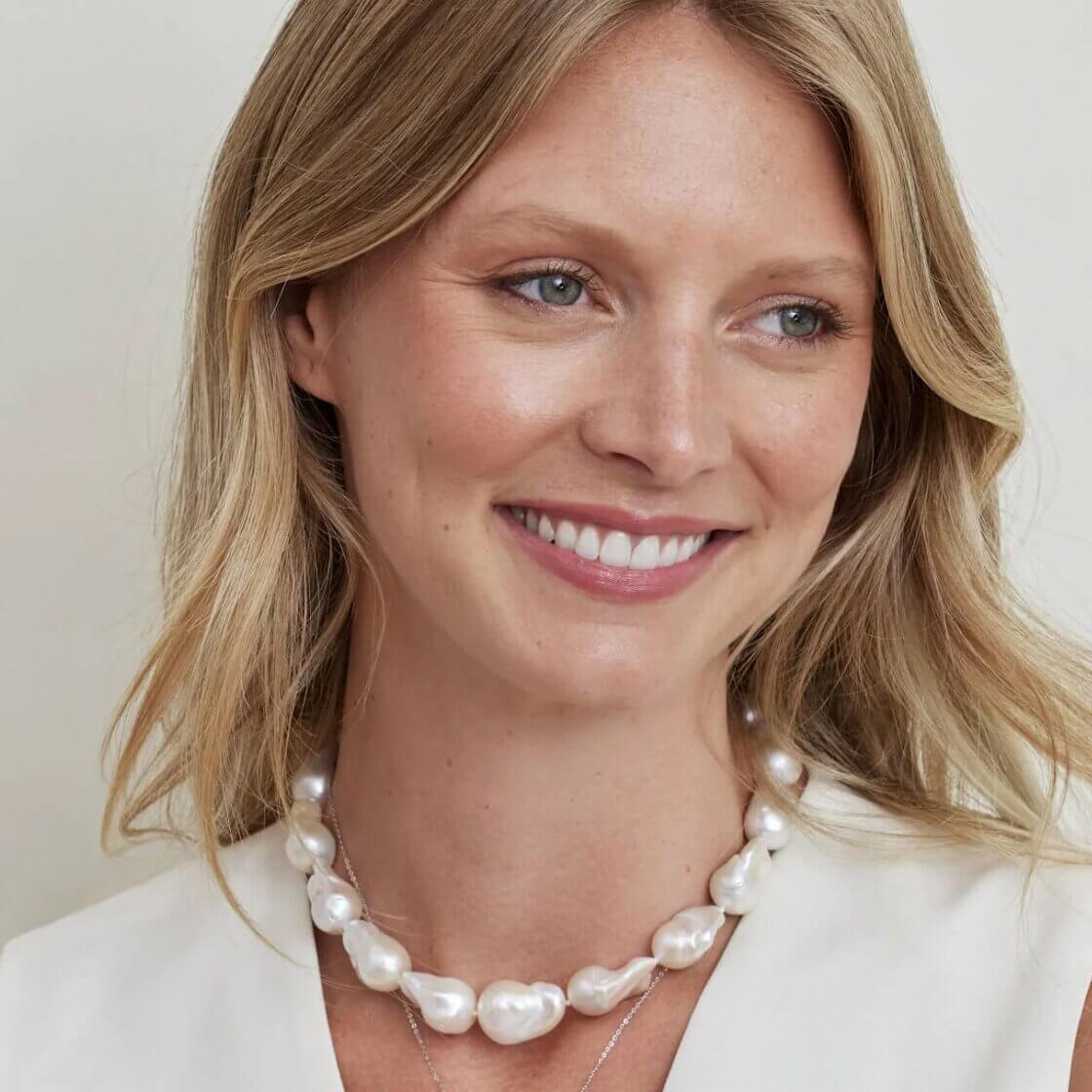
Baroque pearls are irregularly shaped, sometimes dramatically so, and baroque Tahitian pearl earrings in particular have become a real style category rather than a budget fallback. Their asymmetry actually highlights color and luster in a way round pearls sometimes don’t, since light catches the irregular surface differently. Baroque styles tend to look modern and artisanal, and they’re often more accessible price-wise than an equivalent-size round pearl, since roundness carries its own premium.
There’s no wrong answer here, since it’s a style preference more than a quality hierarchy, even though round pearls have historically commanded higher prices.
The setting changes both the tone of the finished piece and how it wears over time. It’s worth matching the metal to the pearl’s overtone rather than choosing on its own, since the two interact more than people expect.
Silver offers a cool, understated frame that lets the pearl’s overtone lead, and it’s typically the most affordable option. White gold gives a similar cool tone with more durability and a brighter finish, making it a common choice for diamond-accented styles. Yellow gold warms the whole piece up and creates more contrast against the pearl, which can make the color pop. Rose gold is the least traditional pairing but has become increasingly popular, especially with lighter overtones like silver or aubergine, where the pink tone creates a nice contrast rather than competing with the pearl.
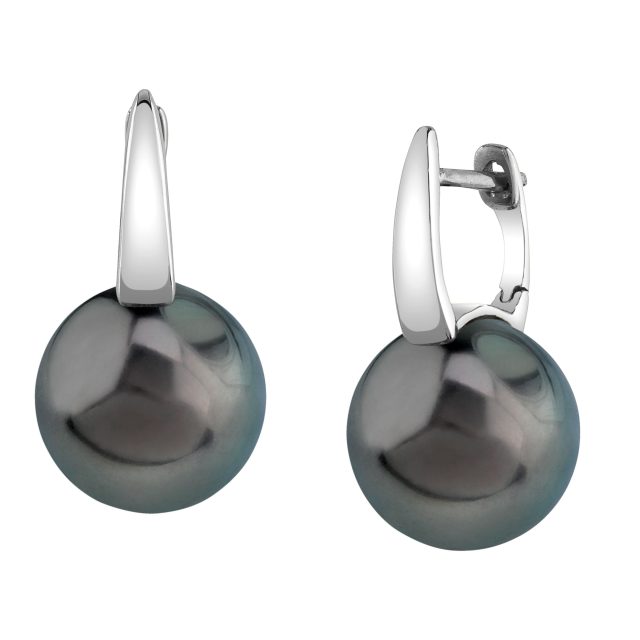
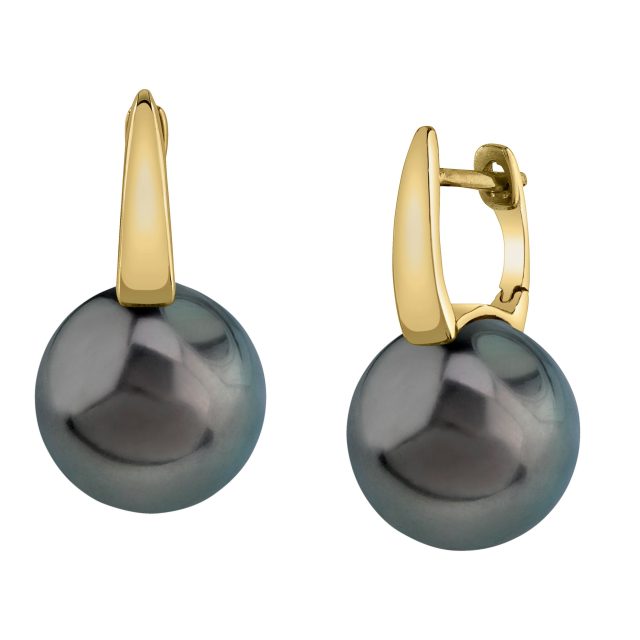
As a rule of thumb, cooler pearl overtones like blue or silver tend to look most balanced in silver or white gold, while warmer overtones like bronze, aubergine or gold hold their own against yellow or rose gold.
The right pair often comes down to how and where you’ll actually wear it, more than any single spec on its own. The same earrings that make a great gift might be the wrong choice for daily wear, so it helps to think about occasion first.
For daily wear, smaller round studs in the 8-9mm range are hard to beat, since they’re secure, low-maintenance and versatile enough to move from a work day into dinner without feeling out of place.
For gifts, a lot depends on the occasion and how well you know the recipient’s style. A classic round stud in a mid-range size is a safe, well-loved choice for most milestones, while a diamond-accented style or a baroque pair signals more thought without straying from what’s broadly flattering.
For statement jewelry, look toward larger sizes, drop or dangling styles, and richer overtones like deep peacock or aubergine. These are the pairs meant to be noticed, whether that’s a 12mm-plus stud or an elaborate diamond drop for a formal event.
Whatever combination fits, the goal is the same: a pair that suits your coloring, your lifestyle and the amount of attention you want your earrings to draw. Once you’ve narrowed down color, size and style, our full range of Tahitian pearl earrings makes it easy to compare options directly, and our broader Tahitian pearl collection is worth a look if you’re also considering a necklace or pendant to match. And once your earrings arrive, a little routine care goes a long way: our pearl care guide covers the basics of keeping the luster looking its best.
Signup now and receive an email once I publish new content.

Content Writer and Editor at The Pearl Source
Katie Muirhead is the editor and primary writer for The Pearl Expert. With a background in fashion and experience creating content for global jewelry brands, she writes practical guides on pearl quality, buying decisions, care, gifting and modern styling. She also contributes pearl education and editorial content for The Pearl Source.
 What Is a Pearl Oyster? How Oysters Make Pearls