
Baroque Pearls: Meaning, Value, Types & How They Form
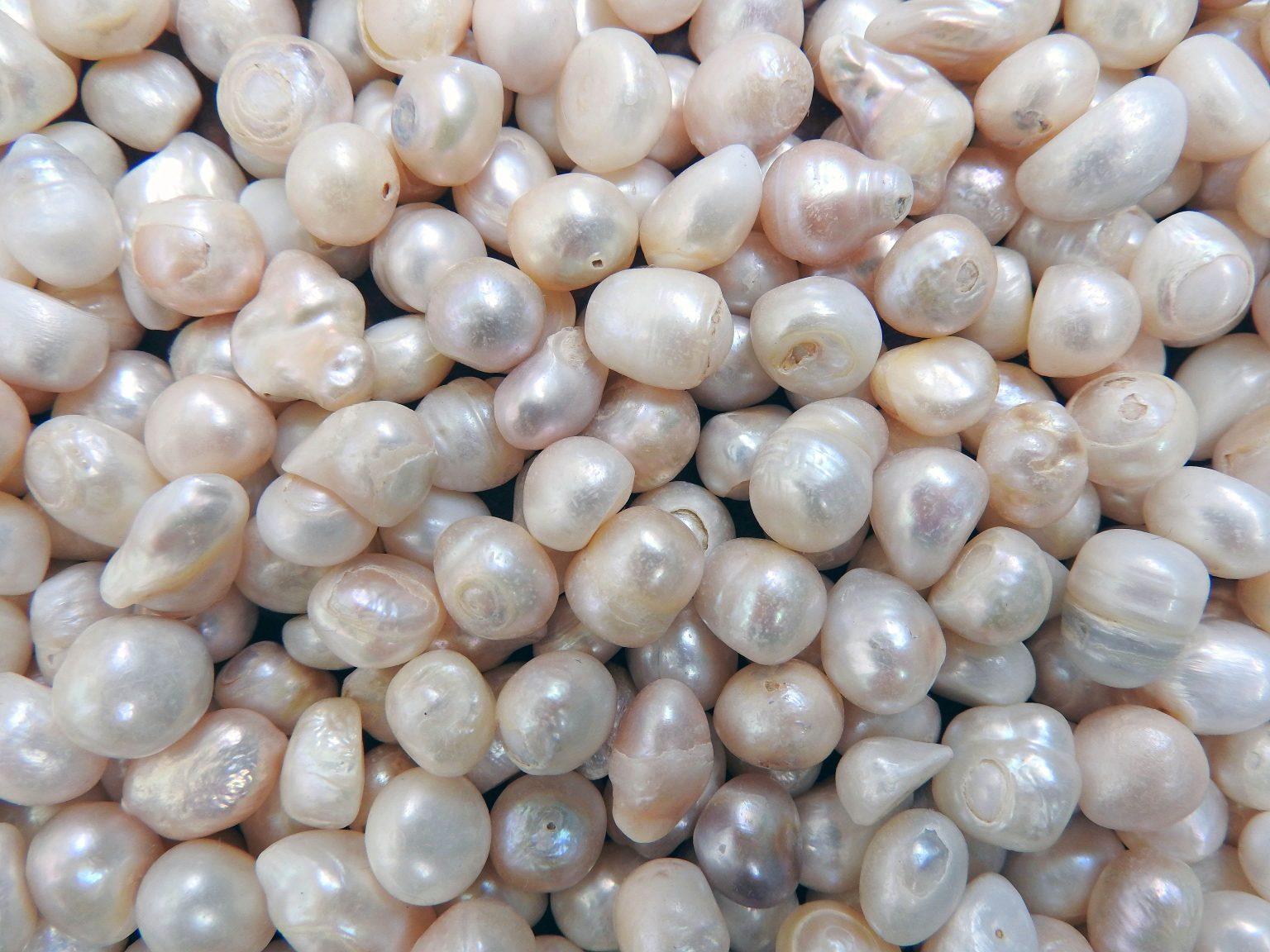
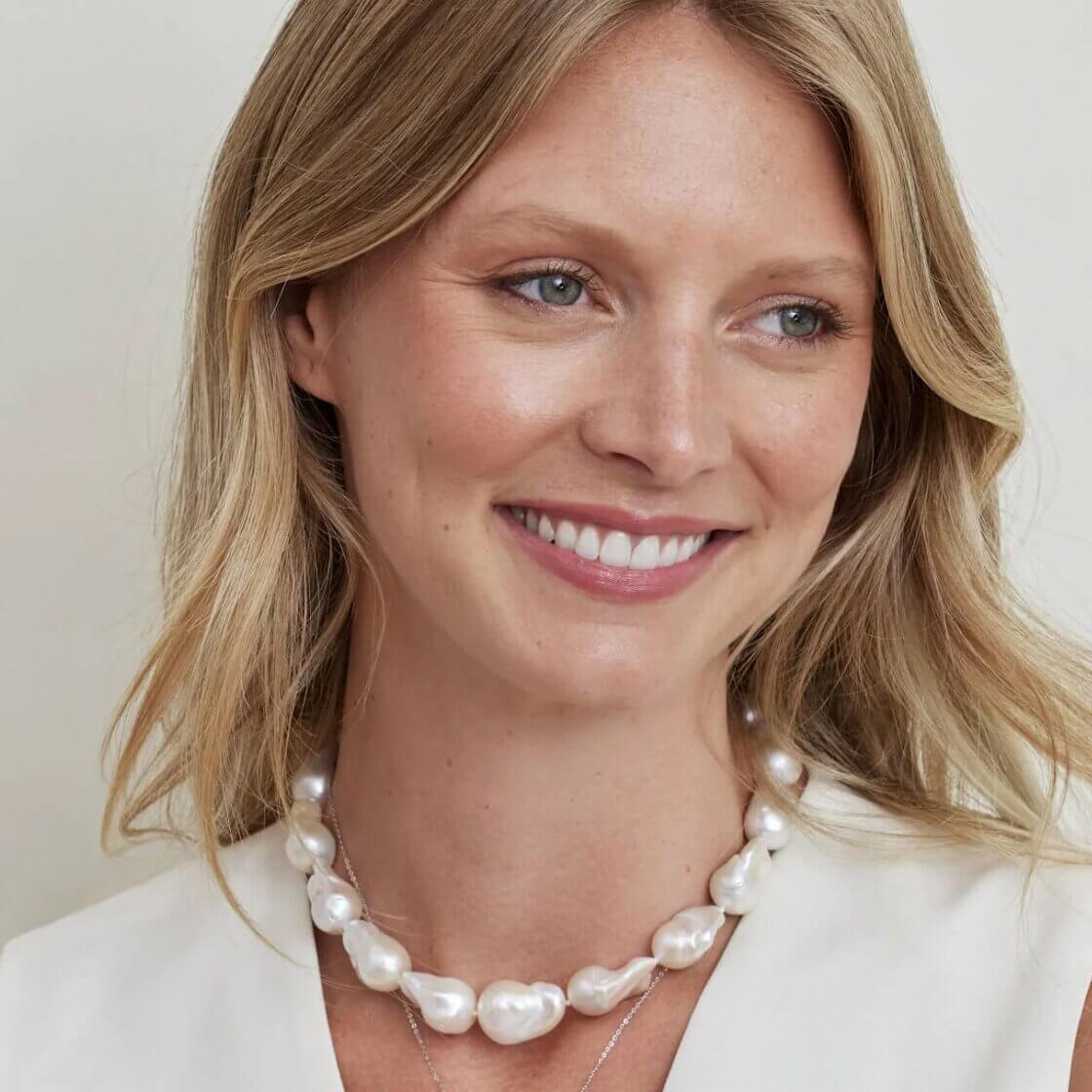
Baroque pearls are genuine pearls with irregular, non-spherical shapes. “Baroque” describes shape, not whether a pearl is natural or cultured, freshwater or saltwater, valuable or inexpensive.
Most baroque pearls sold today are cultured. They may be softly oval, asymmetrical, ridged, circled or dramatically free-form. Their individuality is part of their appeal, but shape is only one part of quality. Luster, surface, nacre, size, color and matching (when several pearls are used together) also affect beauty and value.
This guide explains how baroque pearls form, how freshwater, Tahitian, South Sea and Akoya examples differ, what makes one baroque pearl more valuable than another, and what to check before buying.
A baroque pearl is a pearl whose form is noticeably irregular rather than round or symmetrically shaped. It can still have excellent luster, attractive color and a clean surface. The term therefore should not be used as a synonym for fake, damaged or low quality.
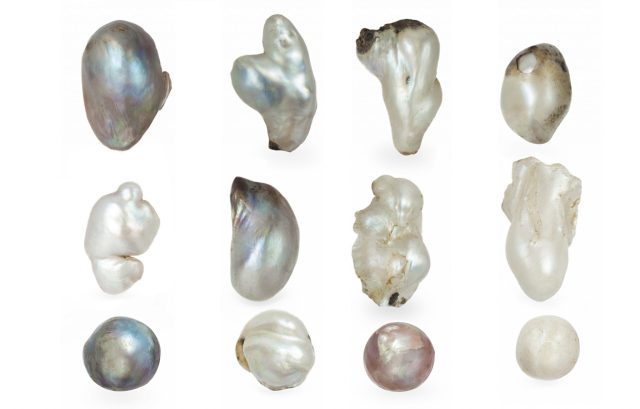
Pearl-shape terminology varies slightly across laboratories and the trade. GIA describes basic shapes that include round or semi-round, button, drop, pear, oval, baroque and circled. Some sources also use semi-baroque for pearls that are asymmetrical but less irregular than fully baroque examples.
The useful distinction is simple: “baroque” describes the external form. It does not identify the mollusk, country of origin, cultivation method or grade.
Pearls grow when a mollusk deposits layers of nacre or other pearl material around material inside a pearl sac. In cultured-pearl production, a technician initiates this process by introducing mantle tissue, sometimes together with a bead nucleus.
A perfectly spherical result requires very even growth around the developing pearl. If the pearl sac, nucleus, tissue or growth conditions produce uneven deposition, the pearl can develop an asymmetrical or free-form shape. Both bead-cultured and non-bead-cultured pearls can be baroque.
Freshwater cultured pearls are often tissue-nucleated and are widely available in non-round forms. Tahitian and South Sea cultured pearls can also be baroque, including large and highly sculptural examples. Akoya production is associated more strongly with round pearls, but baroque Akoya pearls exist as well.
Baroque shape is therefore a normal outcome of pearl formation—not evidence that something is wrong with the pearl.
How a baroque pearl looks and what it costs depend heavily on which pearl type it comes from. In fact, this variety is one of the reasons why baroque styles are gaining ground with younger pearl buyers drawn to less traditional shapes.
Freshwater cultured pearls offer the widest range of irregular shapes and usually the most accessible prices. They’re commonly white, cream, peach, pink or lavender, although color and treatment disclosures should always be checked.
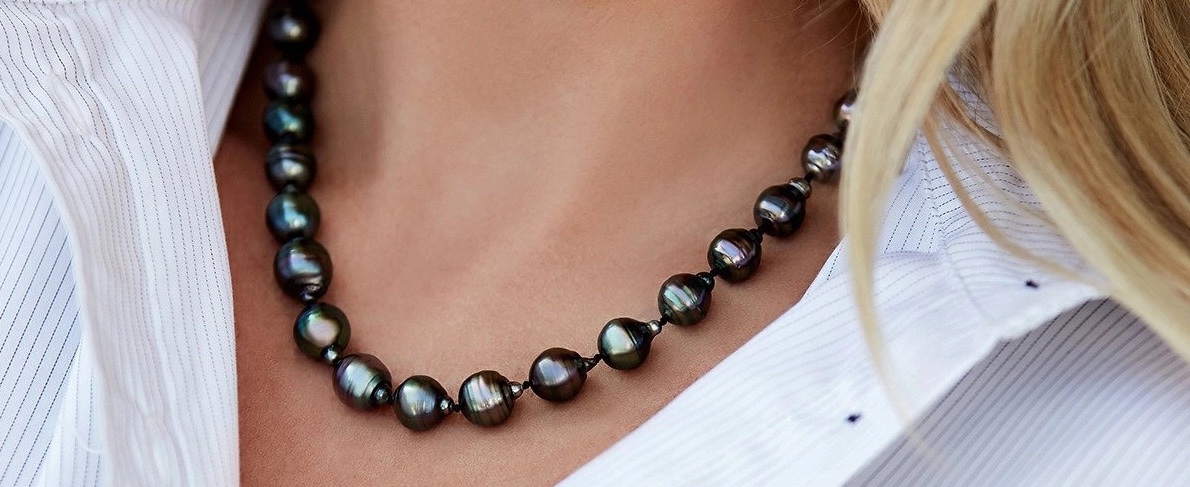
Tahitian cultured pearls are naturally dark and may show gray, green, blue, aubergine or peacock-like overtones. Baroque forms can emphasize their orient and changing color from different angles.
White and golden South Sea cultured pearls are prized for their larger sizes and satin-like luster. Fine baroque South Sea pearls can be valuable, especially when the shape is balanced or visually striking.
Akoya cultured pearls are best known for roundness and sharp luster. Baroque Akoya examples are less typical and can have organic forms while retaining the crisp reflections associated with the pearl type.
These terms are related, but not interchangeable.
Baroque: Distinctly asymmetrical or irregular in form.
Semi-Baroque: A trade term often used for a less extreme asymmetrical shape.
Circled: A pearl with one or more rings or grooves around its circumference. Circled pearls may also be baroque.
Keshi: A non-bead cultured pearl produced without a bead nucleus. Many keshi pearls are baroque, but baroque shape alone does not make a pearl keshi.
Coin, heart, stick and other novelty forms shouldn’t be presented as naturally occurring “types” of baroque pearl either. Some are trade shapes tied to cultivation methods or shaped nuclei rather than distinct pearl categories.
Yes. Natural and cultured baroque pearls are real pearls. Cultured does not mean imitation: cultured pearls form in living mollusks with human assistance, while imitation pearls are manufactured from materials such as glass, plastic or coated beads.
Irregularity alone does not prove authenticity. Imitations can be molded to look organic, and real pearls can be relatively smooth or well matched. Examine the depth and sharpness of luster, surface variation, drill holes, weight and the consistency of the coating. For an expensive or unidentified pearl, an independent gemological report is more reliable than a home test.
The traditional tooth test is not a reliable primary authentication method. It is subjective, does not identify pearl origin or treatment, and rubbing jewelry against teeth can mark a delicate surface or damage a setting.
Baroque pearls range from inexpensive freshwater cultured pearls to rare natural pearls and fine Tahitian or South Sea cultured pearls worth far more. There’s no reliable percentage or fixed price difference between baroque and round pearls.
GIA evaluates pearl quality through seven factors: size, shape, color, luster, surface, nacre and matching. For a single baroque pearl, the most important questions are usually:
All else being equal, round pearls are generally rarer and often command a premium. But a well-formed baroque pearl with exceptional luster, color and character can be more desirable than a dull or heavily blemished round pearl. Shape should never be judged in isolation.
Freshwater, Akoya, Tahitian and South Sea pearls differ in typical size, color, luster and price.
Reflections should appear bright and reasonably sharp rather than chalky or flat.
A successful baroque pearl should look intentional and attractive from the angle in which it will be worn.
Natural texture is expected, but peeling coating, obvious damage or rough drilling is not.
In earrings, bracelets, and certain necklace styles, the pearls do not need identical shapes, but their size, color, luster and overall character should feel cohesive.
Color treatment, coating or other enhancement should be disclosed, and close-up images should represent the actual piece when each pearl is unique.
A laboratory report is especially useful for claims about natural origin, rare saltwater pearls or unusually valuable pieces.
Baroque pearls need the same gentle care as other pearls. Put them on after perfume, hairspray, cosmetics and lotions. After wearing, wipe them with a soft, slightly damp cloth and let them dry before storage.
Store pearl jewelry separately from harder gemstones and metal edges that can scratch the surface. Do not use ultrasonic or steam cleaners. If a strand is worn frequently, have the knots and clasp checked periodically; restringing is preferable before the silk becomes stretched or soiled.
Pronounced ridges and thin projections can make some free-form pearls more vulnerable to impact, so avoid dropping them or wearing them during sports, bathing or household cleaning.
They can be either. Most baroque pearls sold in modern jewelry are cultured, while natural baroque pearls are much rarer. Shape alone can’t determine whether a pearl is natural or cultured.
Often, but not always. Roundness generally commands a premium when all other quality factors are equal. Fine luster, size, color, surface, nacre and an attractive form can make a baroque pearl highly desirable.
Yes. Freshwater cultured baroque pearls form in living mussels and are real pearls. “Cultured” describes human-assisted production; it doesn’t mean artificial.
Baroque describes shape. Keshi describes a non-bead cultured pearl formed without a bead nucleus. Many keshi pearls are baroque, but most baroque pearls are not necessarily keshi.
Don’t rely on shape or the tooth test alone. Examine luster, surface, drill holes, weight and seller disclosures; for a valuable item, use a qualified jeweler or gemological laboratory.
Baroque pearls aren’t failed round pearls. They’re genuine pearls whose irregular forms create individuality, movement and design possibilities that perfectly round pearls can’t replicate.
Choose them the way an expert evaluates any pearl: identify the pearl type, look closely at luster and surface, consider nacre, color and size, and decide whether the shape feels balanced and intentional. A strong baroque pearl should be valued for the whole gem—not excused simply because it’s unusual.
For a visual overview of shapes and jewelry styles, continue to The Pearl Source’s Baroque Pearls Guide. To browse available jewelry, visit the Baroque Pearls collection.
Signup now and receive an email once I publish new content.
