
Why Freshwater and Akoya Pearls Are Often Confused
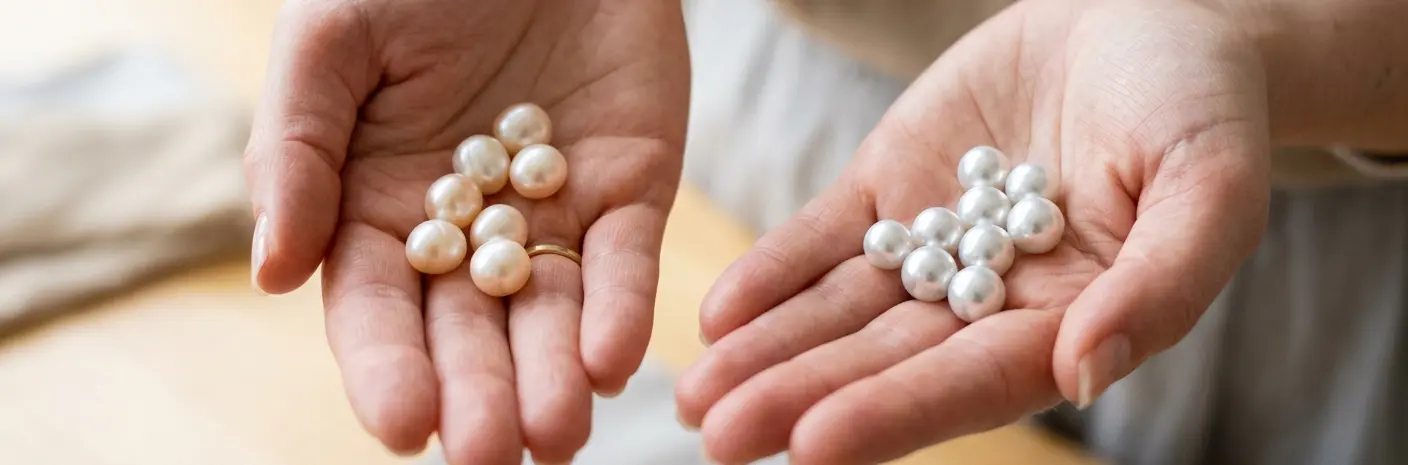
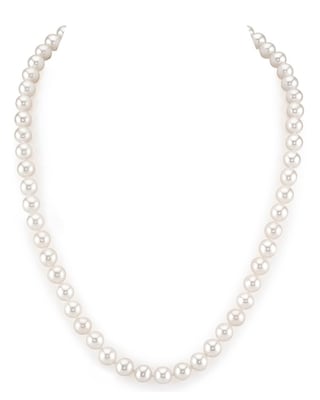
Freshwater and Akoya pearls are both real cultured pearls, and in classic white strands or studs they can look very similar. Akoya pearls are saltwater pearls known for sharp, mirror-like luster and closely matched round shapes, and they usually cost more. Freshwater pearls tend to have a softer glow, come in a wider range of sizes and shapes, and are usually priced lower.
For most shoppers, the choice comes down to which matters more: the crisp, uniform look Akoya is known for, or the value and variety of freshwater. Quality matters as much as type, though. Individual pearls vary, and a high-quality freshwater strand can show brighter luster and cleaner surfaces than a lower-quality Akoya one. For a full side-by-side, The Pearl Source has a detailed Freshwater vs. Akoya comparison.
Akoya pearls are saltwater cultured pearls, farmed mainly in Japan and China. Each one forms around a shell bead placed inside the oyster, with nacre building up in layers over the bead. White and cream Akoya strands are what many people picture as the classic pearl necklace.
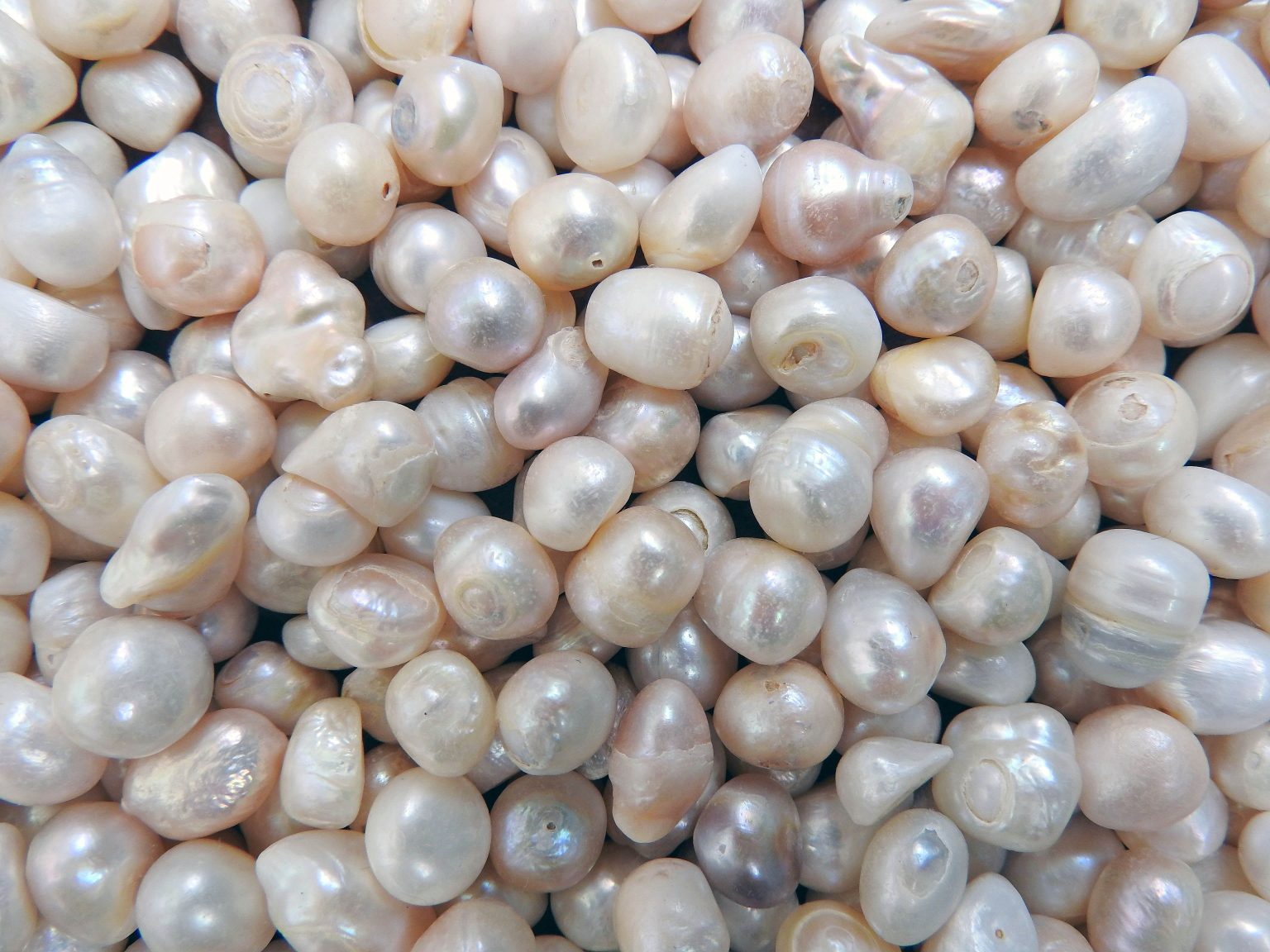
Freshwater pearls are cultured in lakes and ponds, with China as the leading source. One mollusk can grow many pearls at once, and most have traditionally been grown without a bead, so they are typically solid nacre. Some freshwater pearls are now bead-cultured using the same technique as Akoya, which can make the two look even more alike. The freshwater process produces a much wider range of sizes, shapes and colors, and it helps explain why freshwater pearls are available at lower prices.
Most people encounter pearls in their simplest form: white strands, pendants, or studs. In these cases, both freshwater and Akoya pearls are widely used—and often styled in nearly identical ways. Without context, it’s easy to assume they’re interchangeable.
This question also tends to come up when someone notices a price difference between two similar-looking pieces. If one strand looks nearly identical but costs significantly less, it naturally raises the question: what’s actually different here?
Part of the confusion comes from the fact that freshwater pearls have improved significantly over time. Higher-quality freshwater pearls today can be quite round and bright, which makes the visual gap between the two types feel smaller than expected.
These are tendencies, not rules, and some freshwater pearls are very round and bright. The differences are also much easier to see in person than in photos, where lighting and editing can change how luster appears. A photo alone may not establish which type a pearl is, so rely on the seller’s stated pearl type instead of appearance.
The same factors determine quality in both types: size, shape, color, luster, surface, nacre and, for strands and pairs, how well the pearls match. Luster is often considered the most important of these, and round is the hardest shape to culture. Bright, round, well-matched pearls cost more in either type.
Those factors explain most of the price gap. Akoya pearls are valued for sharp luster and consistent roundness, while freshwater pearls are the most commonly produced type. Nacre deserves a closer look with Akoya: because the pearl forms over a bead, thin nacre can leave it looking dull or chalky and can affect how well it wears. Akoya pearls also typically range from about 6 to 9mm, so shoppers who want larger pearls usually look at freshwater.
“Freshwater and Akoya pearls can look very similar at first, especially in classic white styles, but luster is usually the giveaway. Once you know what to look for, the distinction becomes much clearer.”
— Lauren Greenberg, GIA-Certified Pearl Expert
Luster alone can’t identify a pearl type, though. High-quality freshwater pearls can be very lustrous, and some are now bead-cultured like Akoya, so the seller’s stated pearl type is the reliable guide.
Yes—both are real, cultured pearls. They’re simply grown in different environments and formed in different ways.
Higher-quality freshwater pearls can be quite round and bright, especially in smaller sizes, which makes them visually similar at a glance.
Akoya pearls are known for their sharper, more mirror-like luster, while freshwater pearls tend to have a softer glow.
Often, yes. Akoya pearls typically cost more because of their sharp luster and consistently round, well-matched shapes. The gap narrows or widens with quality and size, so compare specific pieces instead of assuming by type.
Both can last for many years with proper care, and how well a pearl holds up depends on the individual piece and how it’s looked after. Nacre is worth checking: freshwater pearls grown without a bead are solid nacre, while an Akoya pearl’s durability depends on how thick the nacre is over its bead.
Not reliably. Lighting, editing and pearl quality all change how luster and shape appear, and high-quality freshwater pearls can look very close to Akoya, especially bead-cultured ones. Check the product listing for the stated pearl type.
Signup now and receive an email once I publish new content.

Content Writer and Editor at The Pearl Source
Katie Muirhead is the editor and primary writer for The Pearl Expert. With a background in fashion and experience creating content for global jewelry brands, she writes practical guides on pearl quality, buying decisions, care, gifting and modern styling. She also contributes pearl education and editorial content for The Pearl Source.
 What Age Can You Wear Pearls?
 What Pearls Make the Best Anniversary Gift?