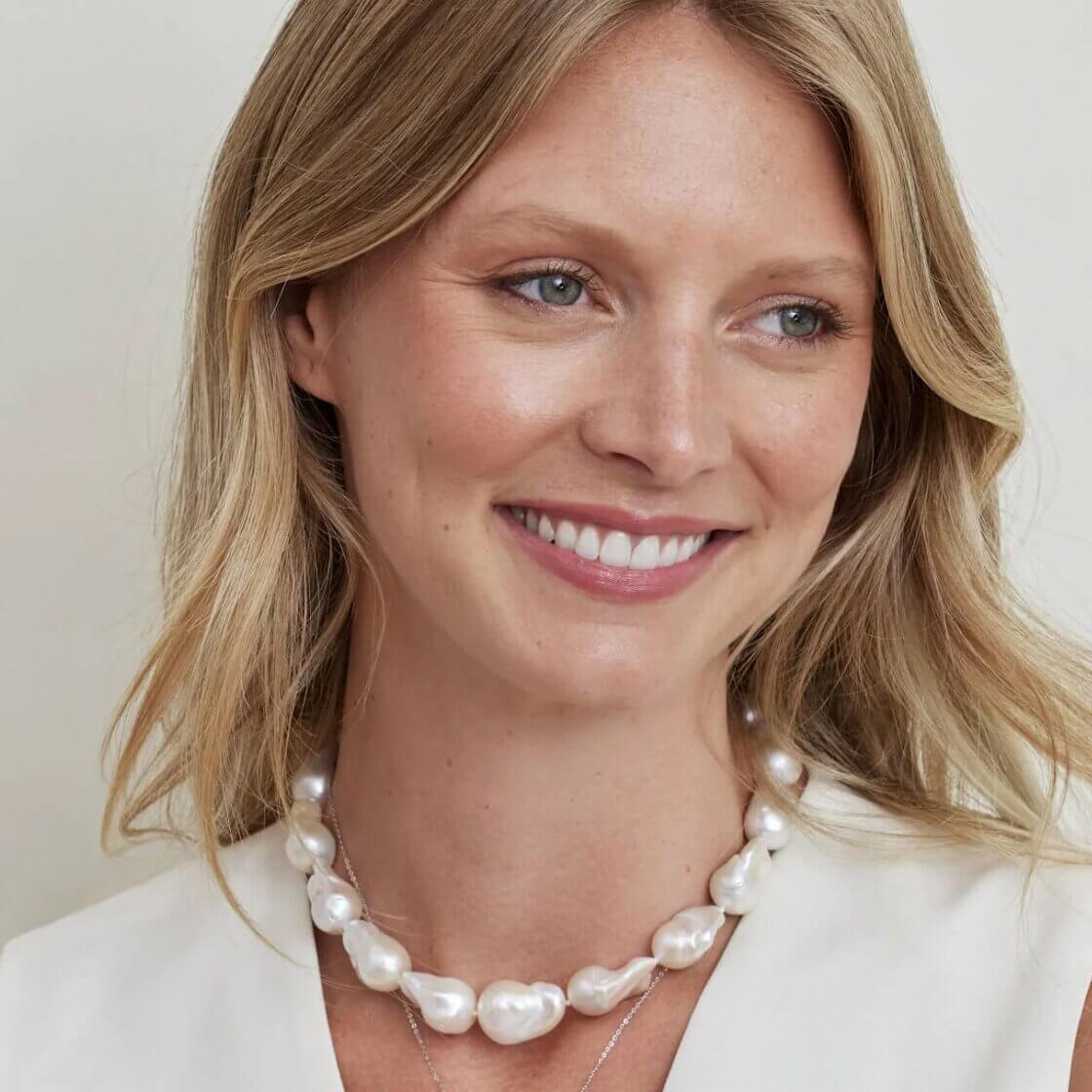
Why Do Pearl Prices Vary So Much?
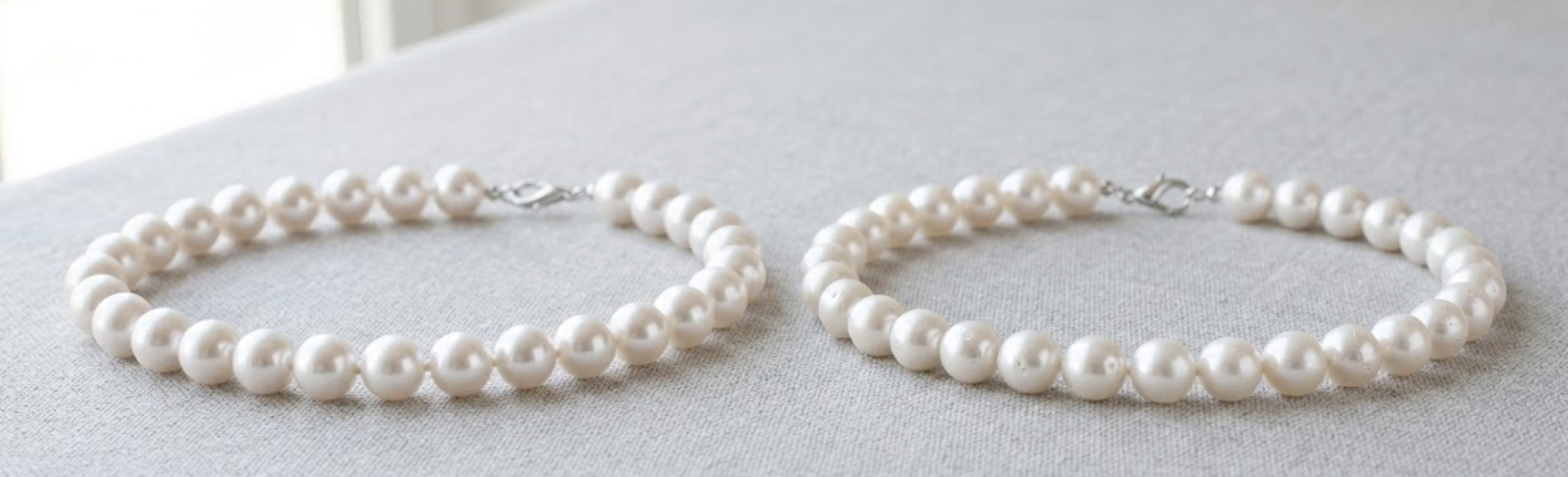
If you’ve started shopping for pearls, you’ve probably noticed that one necklace might cost a few hundred dollars while another that looks very similar costs several thousand.
In most cases, the difference comes down to pearl quality, rarity, and matching. Two pearl necklaces can appear similar at first glance, but experts may evaluate them very differently.
Pearls are unusual compared to many other gemstones because there isn’t a single factor that determines value.
Many buyers naturally focus on pearl size, but factors like luster, surface quality, matching, and pearl type often have a bigger impact on price than people expect.
This can make pearl pricing feel confusing, especially when comparing pieces online.
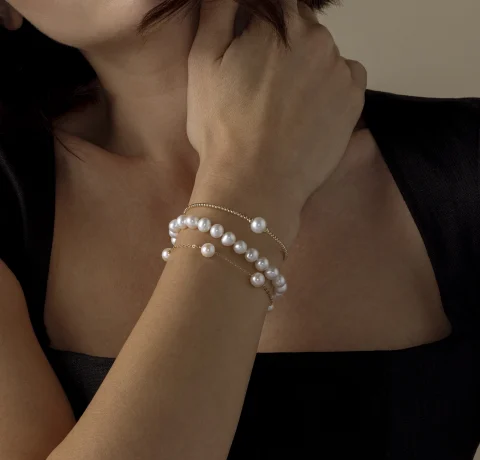
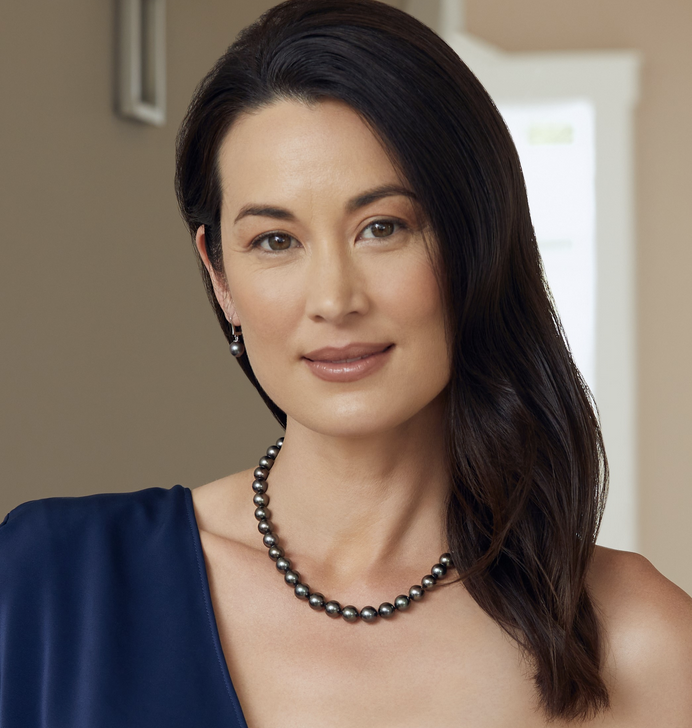
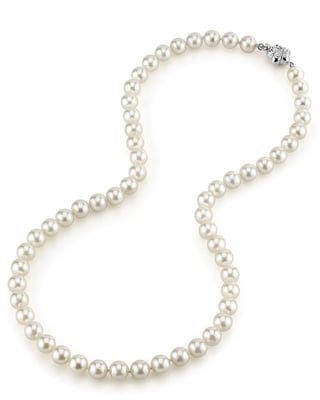
This is where many buyers get confused. Two necklaces may look nearly identical in product photos, but one may have significantly stronger luster, cleaner surfaces, better matching, or a rarer pearl type.
For example, a strand of highly matched Akoya pearls with exceptional luster may cost substantially more than a similar-sized freshwater strand, even if the difference isn’t immediately obvious in a photograph.
The closer pearls come to being perfectly matched and highly lustrous, the rarer and more valuable they become.
One common misconception is that larger pearls are always worth more. While size does affect value, experts usually prioritize luster first. A smaller pearl with exceptional luster often appears more refined than a larger pearl with weaker luster.
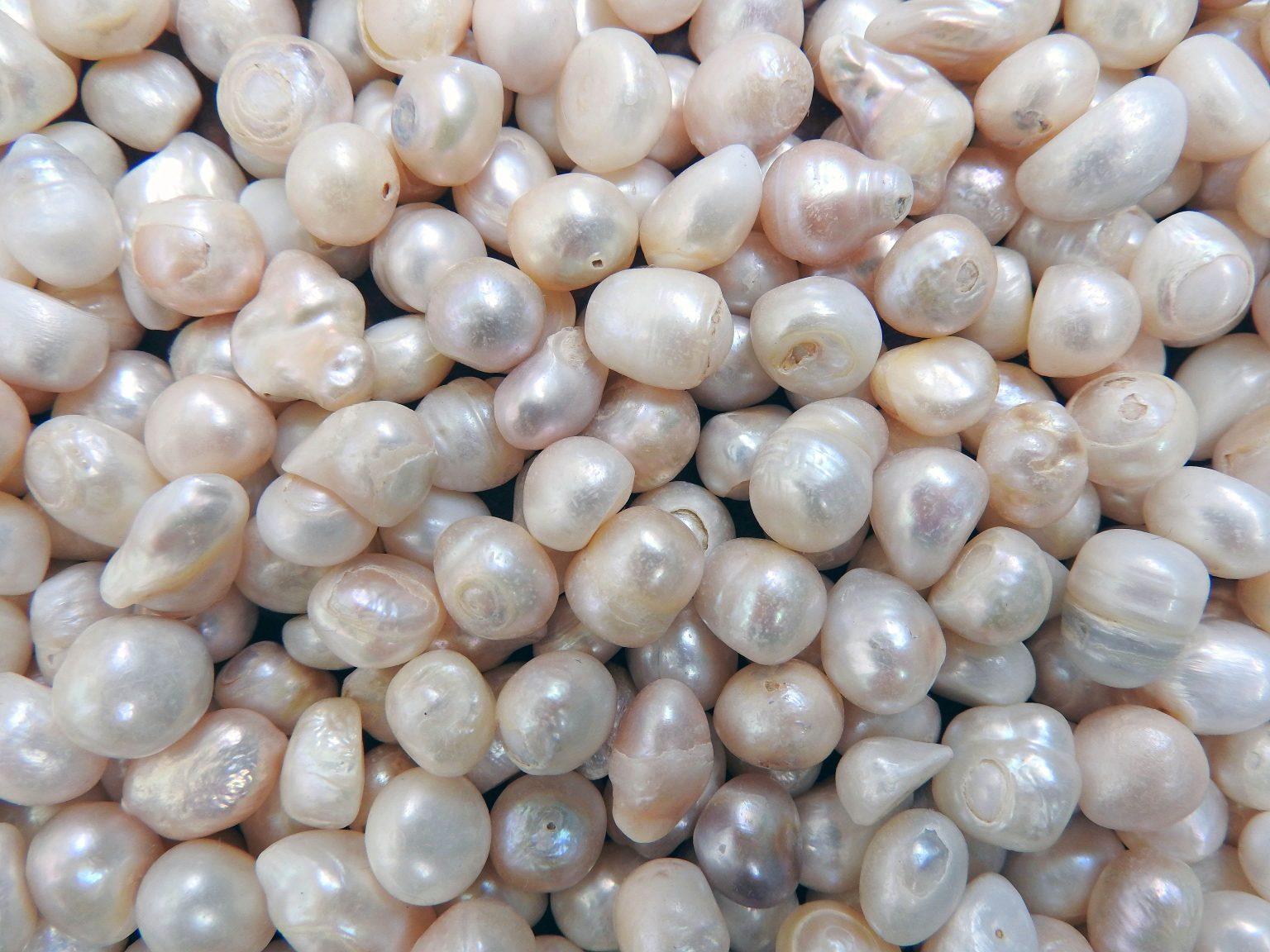
Another mistake is assuming all round pearls are high quality. Shape is only one factor. Surface quality, matching, nacre quality, and luster all contribute to the final value.
For a detailed breakdown of the factors that influence pearl value, see:
What Impacts Pearl Price? Ranked Factors Explained — The Pearl Source
This guide explains how experts evaluate pricing factors such as luster, size, rarity, matching, pearl type, and surface quality.
Expensive vs Affordable Pearls: Understanding Brand Markups & Pricing — The Pearl Source
This guide explains brand markups, and the difference between pearl value and retail pricing.
Not by itself. Larger pearls are generally more rare, but luster, surface quality, and pearl type often have a greater impact on value.
South Sea pearls are larger, rarer, and take longer to cultivate than most other pearl types.
No. Freshwater pearls are often more affordable because they are produced in larger quantities, not necessarily because they are lower quality.
Yes. Luster is one of the most important quality factors and often has the greatest impact on both appearance and value.
Creating a strand requires pearls that closely match in size, shape, color, and luster, which increases rarity and labor.
“Many buyers focus on size first, but luster is usually what creates the biggest difference in how valuable a pearl appears.” — Lauren Greenberg, GIA-Certified Pearl Expert
Pearl prices vary because multiple quality and rarity factors work together to determine value. While size matters, characteristics like luster, matching, surface quality, and pearl type often have a much bigger impact than buyers expect.
Understanding these differences makes it much easier to compare pearls confidently and recognize where the value comes from.
Written by:
Katie Muirhead
Content & Editorial
The Pearl Source
Reviewed by:
Lauren Greenberg
GIA-Certified Pearl Expert
The Pearl Source
Signup now and receive an email once I publish new content.

Content Writer and Editor at The Pearl Source
Katie Muirhead is the editor and primary writer for The Pearl Expert. With a background in fashion and experience creating content for global jewelry brands, she writes practical guides on pearl quality, buying decisions, care, gifting and modern styling. She also contributes pearl education and editorial content for The Pearl Source.
 Are Pearls a Good Investment?
 Do Pearls Require More Care Than Other Jewelry?