

How to Tell if a Pearl is Real
There is no single home test that proves a pearl is real. Looking closely at a pearl’s surface, luster, weight and drill hole can tell you whether it is likely to be genuine, and together these checks catch many imitations. What they can’t do is confirm a pearl is real, tell a natural pearl from a cultured one, or detect treatments. For that, you need a gemological laboratory.
It also helps to be clear on what “real” means before you start, and to know which popular tests can damage a pearl. Both are covered below.
Real pearls come in two kinds. Natural pearls form inside a mollusk, usually around a microscopic irritant, without any human help. Cultured pearls form the same way after a technician places a shell bead with a piece of mantle tissue, or mantle tissue alone, inside the mollusk, which then coats it in nacre. Cultured pearls are genuine pearls, and Akoya, freshwater, Tahitian and South Sea are the four major types.
Imitation pearls are not pearls at all. They are manufactured from materials such as glass, plastic, ceramic or coated beads to look like pearls, and no mollusk is involved. Terms such as faux, simulated or shell pearl on a listing describe imitations.

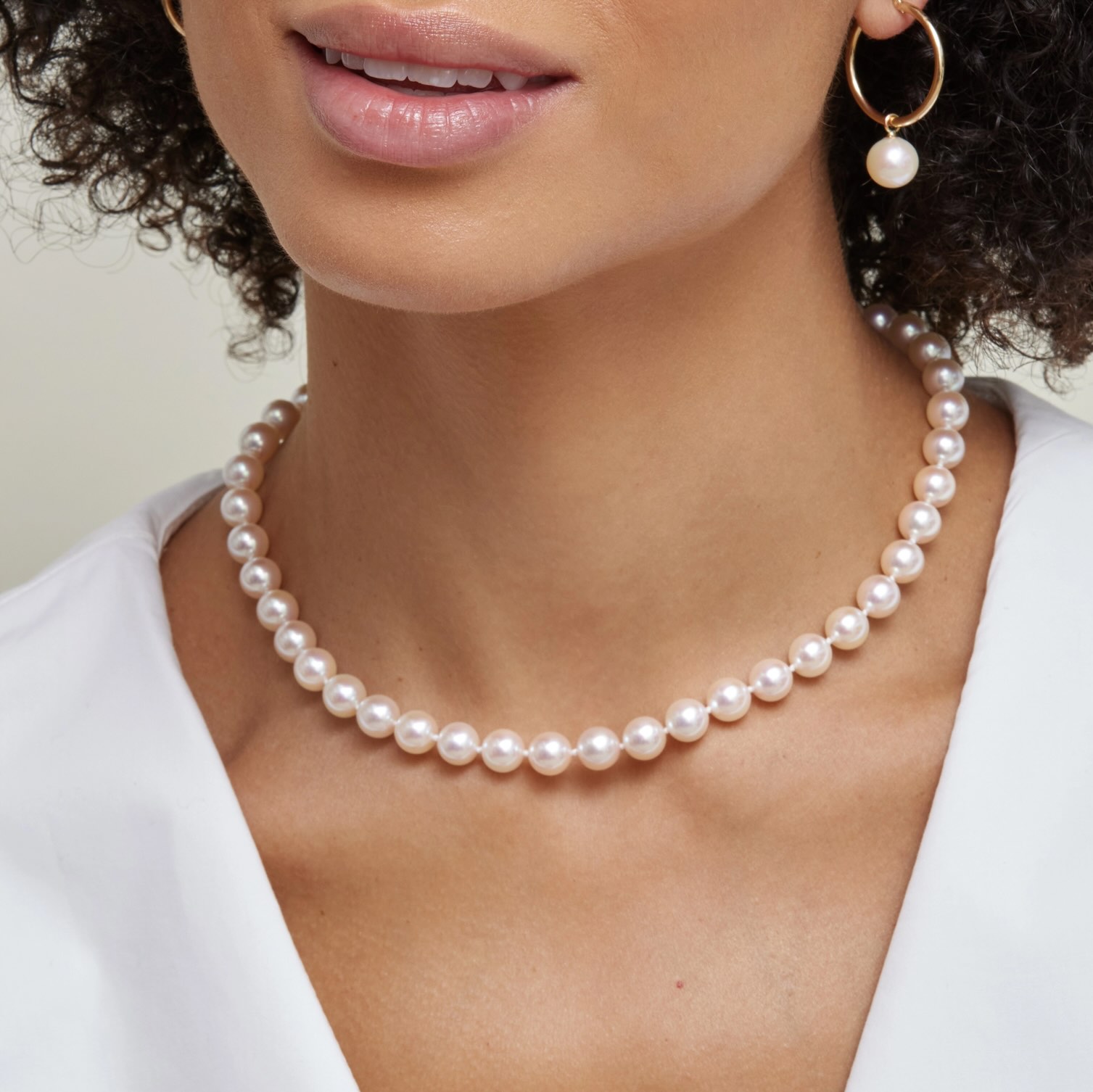
The most common misconception about real pearls is that these types of pearls are extremely expensive, which is why some choose imitations over cultured pearls. But gorgeous gems like Freshwater Pearls make stunning jewelry pieces such as timeless stud earrings, single pearl necklaces or pearl dangle earrings, complete with very attractive price tags.
Each check below is a clue, not proof. Use several together, handle pearls gently, and be cautious about reading too much into any single result.
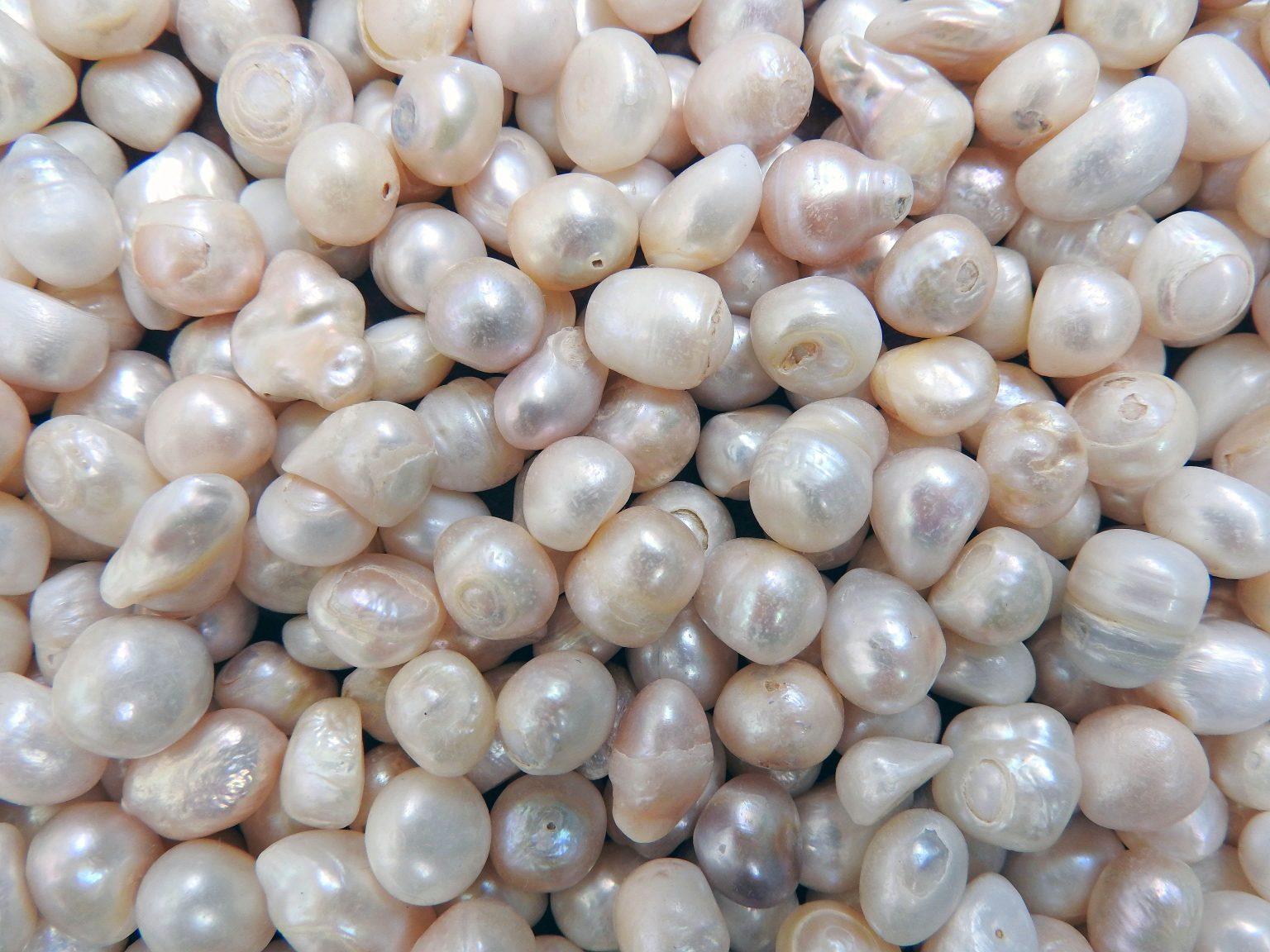
Real pearls usually show small variations in shape and surface, and pearls in a strand are rarely identical. A strand where every pearl looks exactly the same deserves a closer look. Roundness alone is not a warning sign, though: high-quality cultured pearls can be very round with clean surfaces.
Genuine pearls tend to show luster with depth, where reflections seem to come from within the pearl as well as from its surface. Many imitations look flatter, with a shine that sits on top or a slightly chalky, plastic look. Imitations still reflect light, especially glass ones, so look for depth and not just brightness.
Real pearls often feel cool against the skin at first and warm up as they are worn. Plastic imitations tend to feel warm and very light in the hand. Glass imitations can also feel cool and fairly heavy, so temperature and weight help rule out plastic more easily than glass.
The tooth test is the best-known home check. Rub a pearl gently along the edge of your front teeth: a real pearl tends to feel slightly gritty because of fine ridges on its surface, while glass and plastic imitations tend to feel smooth.
Treat the result as one clue. It relies on your judgment, it can’t tell a natural pearl from a cultured one, and it says nothing about treatments or quality. Many retailers also don’t allow it, so don’t expect to use it in a store.
If a pearl is drilled, look closely around the hole. Flaking or peeling of a thin coating, with glass or plastic visible underneath, points to an imitation. Wear at the hole is not conclusive on its own: on a bead-cultured pearl with thin nacre, the bead can sometimes be seen beneath the nacre.
Some guides recommend tests that can damage or destroy a real pearl. Pearls are soft and easily scratched, so skip any test that involves the following.
A test that can ruin a real pearl isn’t worth the answer. If a home check leaves you unsure, a jeweler or a laboratory is the safer next step.
Not reliably. Some imitations look convincing in images, and lighting and editing change how luster and surface appear. A clear close-up of the drill hole can help, but it still isn’t conclusive. When buying online, rely on how the seller describes the pearls and on a clear returns policy.
For most cultured pearl jewelry bought from a seller that clearly states the pearl type, a laboratory report isn’t necessary. It becomes worth considering in a few situations.
A laboratory such as GIA examines a pearl’s internal structure with X-rays to separate natural, bead-cultured and non-bead cultured pearls. Its reports can state whether a pearl is natural or cultured, saltwater or freshwater, and whether any treatments were detected. A seller’s own certificate describes what the seller is offering, which is not the same as an independent report.
The most reliable protection is buying from a specialized retailer that states the pearl type, explains its grading and accepts returns. Knowing how real and fake pearls differ in structure and value also makes it easier to judge whether a price makes sense, and whether paying more is worth it for the piece you have in mind.
Curious to find out more on the topic of real pearls? Read our post on How Are Pearls Made and our educational content on How Do Oysters Make Pearls!
Yes. Freshwater pearls are real cultured pearls, grown in lakes, rivers and ponds. Many are white, but they also come in pastel shades such as pink, lilac and peach, and they are generally more affordable than saltwater pearls.
Yes. Cultured pearls grow inside a mollusk after a person starts the process, and they are made of nacre like natural pearls. Imitation pearls are manufactured and are not pearls.
It’s a useful clue but not proof. A real pearl tends to feel slightly gritty against the teeth, but the result depends on judgment and can’t tell natural from cultured pearls or reveal treatments.
An experienced jeweler can often spot imitations by examining the surface and drill holes under magnification. To confirm whether pearls are natural or cultured, or whether they have been treated, you need a report from a gemological laboratory.
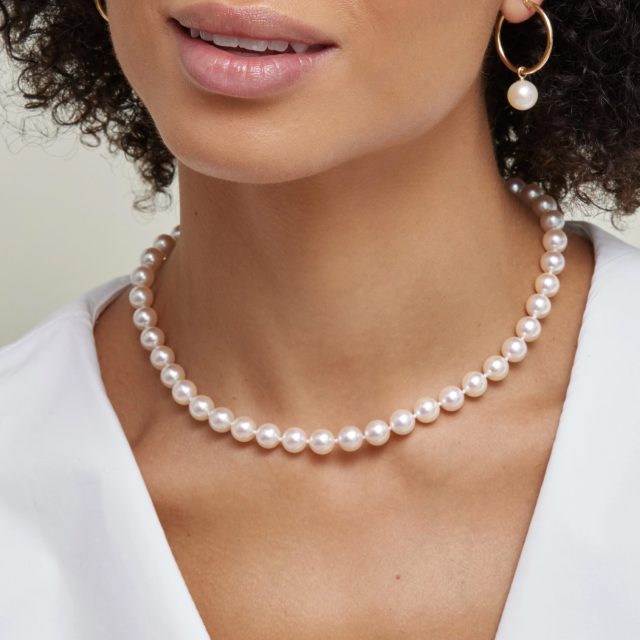
If exquisite luster is what you’re after, then Hanadama Pearl Jewelry is here to cater to your needs. With their amazing radiance, these types of pearls are the epitome of luster and elegance. Discover our mesmerizingly lustrous collection of Hanadama Pearl Jewelry, featuring pearl necklaces, pearl bracelets, earrings and pearl sets that impress through quality, craftmanship and unmatched luster.
Signup now and receive an email once I publish new content.
