Necklace Length Chart: Find the Right Fit for Every Neckline
The best necklace length is the one that lands clearly above or below a garment’s neckline instead of competing with its edge. Start with the standard length chart, then check the result on the wearer: neck size, height, torso length, pendant drop and the exact cut of the clothing can all change where a necklace sits.
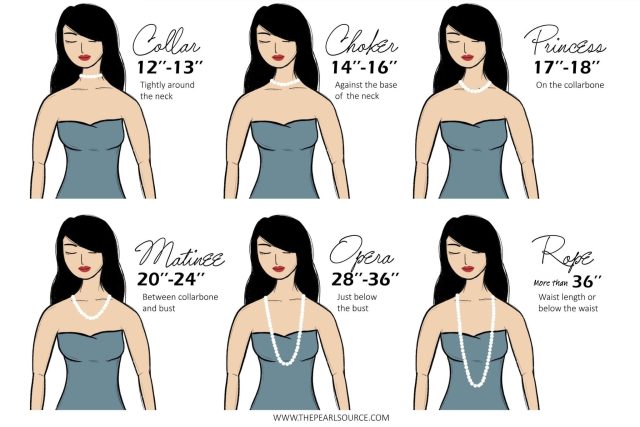
For a versatile starting point, a 17–18 inch princess length works with many open necklines. Chokers and collars emphasize the neck and shoulders, while matinee, opera and rope lengths create a longer vertical line or allow layering.
Key takeaways:
These ranges are common conventions, not manufacturing standards—placement still varies by wearer.
| Style | Typical Length | Usual Placement | Works Well With |
|---|---|---|---|
| Collar | 12–13 in / 30–33 cm | Sits snugly around the middle or upper neck | Open, strapless and off-shoulder necklines, or as the shortest layer above a high neckline when there’s visual space |
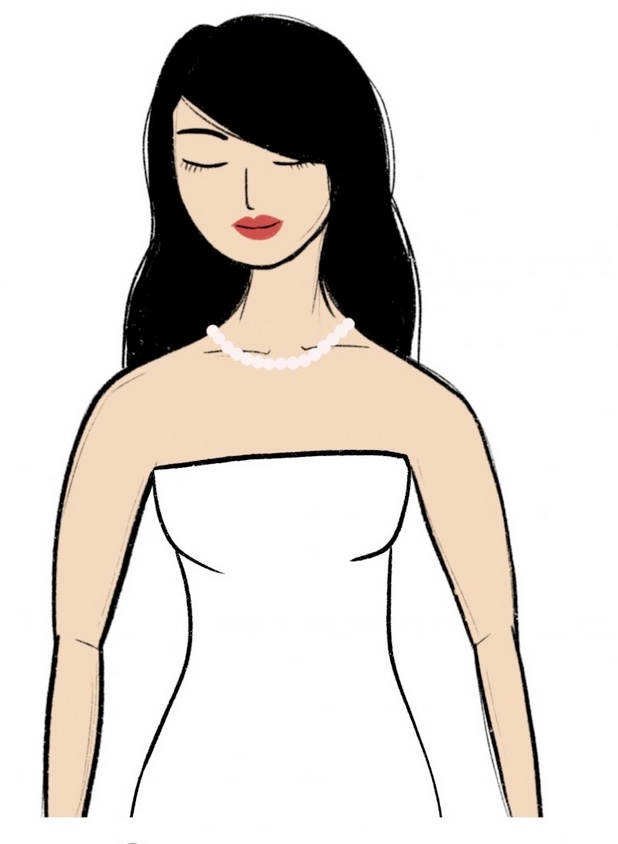
| Choker | 14–16 in / 36–41 cm | Sits at the base of the neck | Strapless, off-shoulder, scoop, square and many V-shaped necklines; may sit too close to some high or heavily detailed collars |
| Princess | 17–18 in / 43–46 cm | Usually lands on or just below the collarbone | A versatile choice for pendants and many everyday, business and bridal necklines |
| Matinee | 20–24 in / 51–61 cm | Usually falls between the collarbone and bust | Simple tops, lower necklines, and as a middle layer |
| Opera | 28–36 in / 71–91 cm | Typically falls at or below the bust, depending on the wearer | High necklines, eveningwear, or doubled as shorter layers |
| Rope | More than 36 in / 91 cm, commonly extending to about 51 in / 130 cm or longer | Worn long, doubled, knotted or arranged as multiple layers | Layering and statement looks |
Measure a necklace laid flat from one clasp end to the other, including the clasp. For a strand, follow the center line rather than measuring only the visible pearls. For a pendant necklace, record both the chain length and the pendant drop, since the pendant will sit lower than the chain’s lowest point.
Measuring a necklace you already own. Lay a well-fitting necklace straight on a flat surface and measure end to end. Note where it lands with the clothing you plan to wear. This is the most reliable reference for buying another necklace or choosing a gift, when access to a favorite piece is possible.
Using ribbon or string to test a length. Cut ribbon or non-stretch string to the target length, fasten or hold the ends safely, and check it in a mirror with the intended outfit. Don’t pull it tightly—the goal is to see placement, not measure neck circumference.
Pendants, pearls and adjustable lengths. Large pearls, multiple strands and rigid collars can sit differently from a fine chain of the same nominal length. Add the pendant drop separately. An extender can provide useful flexibility, especially for gifts or clothing with changing necklines.
Treat these pairings as visual starting points. The goal is usually to echo the neckline shape, fill open space intentionally, or create a clean contrast—not to follow an absolute rule.
Collar, choker and princess lengths keep attention near the face and collarbone. A longer piece can also work when it’s deliberately dramatic.
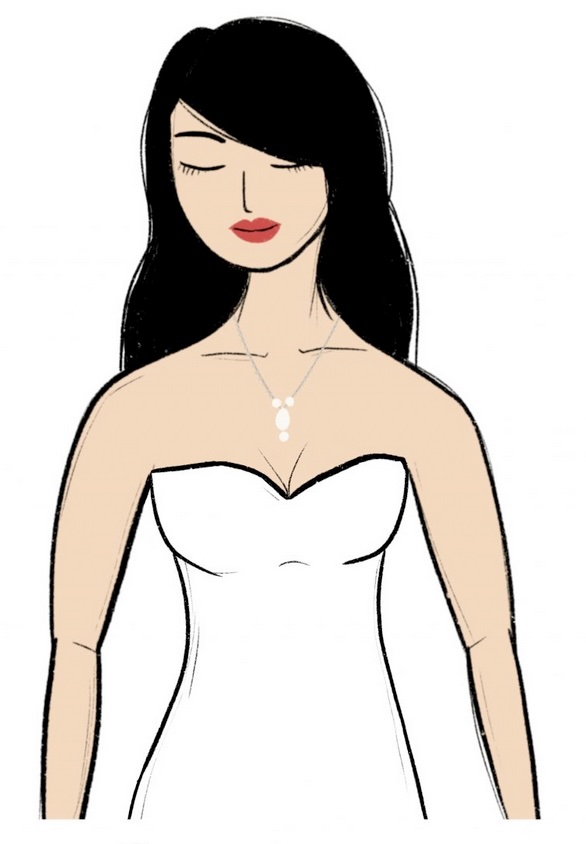
A pendant or drop necklace can echo the downward point. Keep the pendant inside the open area rather than letting it cross the fabric edge awkwardly. A short strand also works when the neckline leaves enough open space.
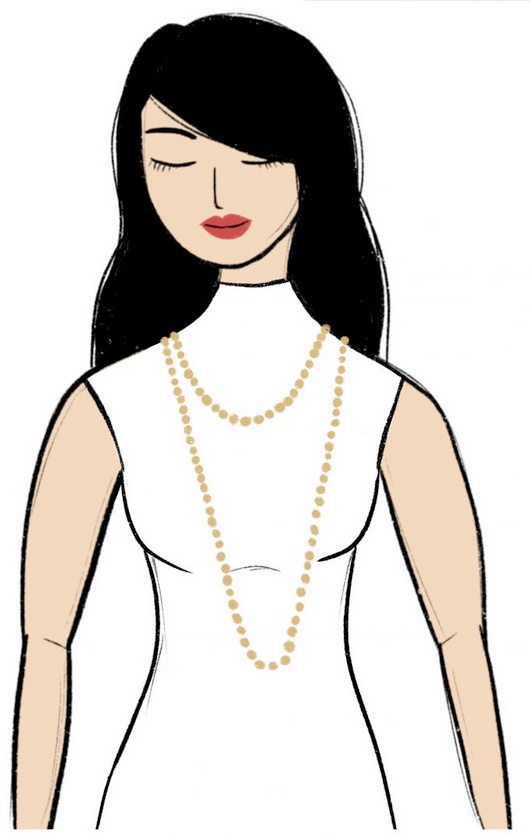
Choose either a short piece that sits clearly above the fabric, or a longer matinee, opera or rope length worn over it. Avoid a necklace that lands directly on the neckline edge. Boat necklines often work best with a shorter necklace above the fabric or a longer vertical piece below it.
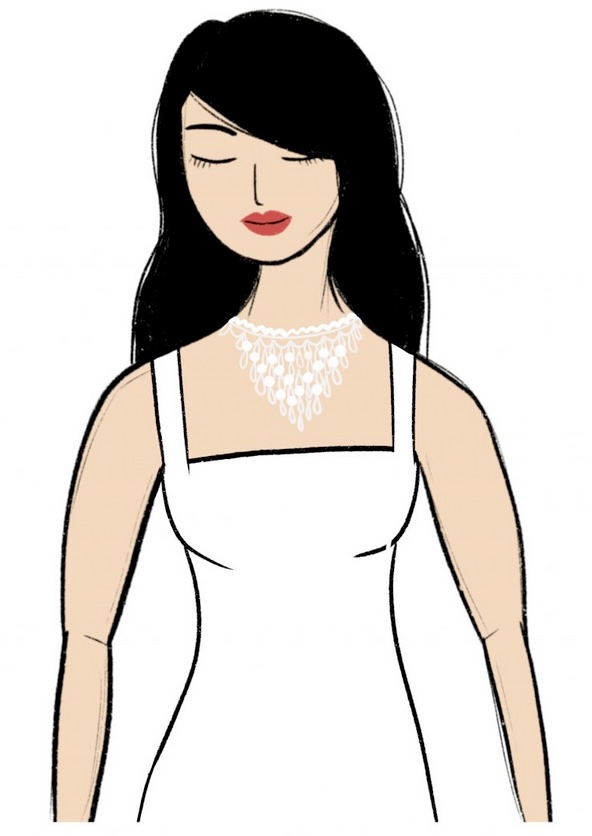
Short bibs, chokers and princess lengths can frame the open shape. Pendants work well when their outline fits inside the neckline rather than competing with its corners or curve.
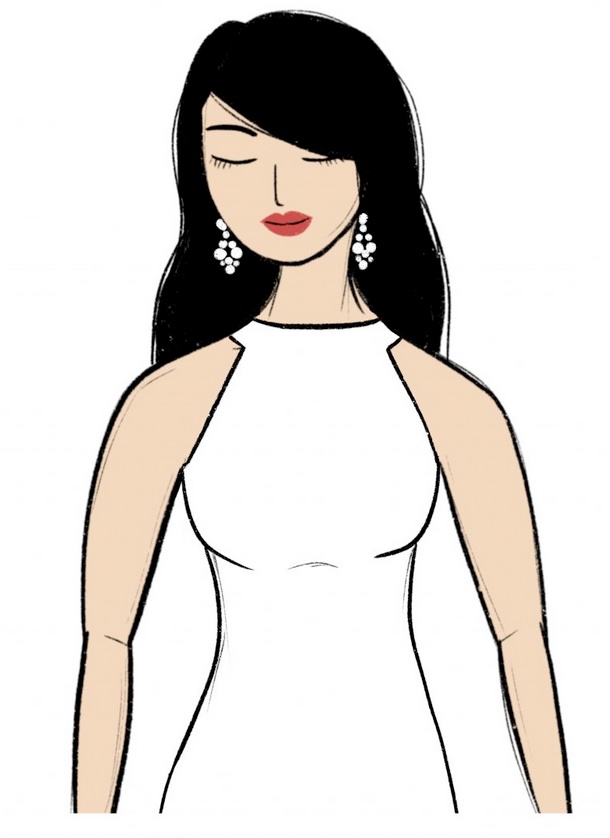
These necklines often have enough structure or detail on their own. Consider skipping the necklace and using earrings or a bracelet instead. If a necklace is used, keep it simple and test it with the exact garment.
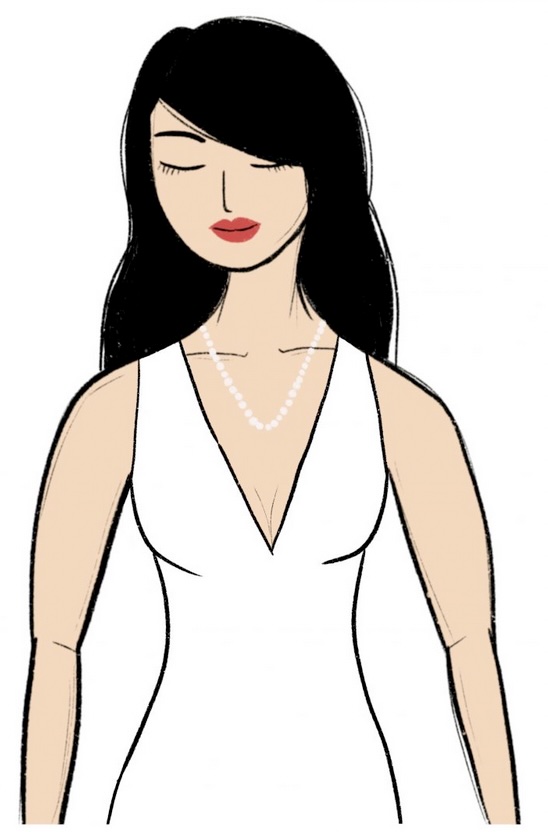
A pendant, lariat or matinee-length piece can follow the open vertical space. The correct length depends on the depth and width of the plunge—the necklace shouldn’t disappear under the fabric or collide with its edge.
The same fit logic applies to bridal necklines, organized here by shape rather than a separate length system: strapless, sweetheart, V-neck, off-shoulder, square, halter, illusion, boat and high neck all follow the same above-or-below-the-edge principle described in the section above.
Gown embellishment, veil, earrings and hairstyle all affect whether a necklace is needed at all—a heavily detailed bodice or a statement veil may mean the cleanest choice is no necklace. For pieces made specifically for bridal wear, The Pearl Source’s wedding jewelry collection is a useful reference alongside our own bridal jewelry guide.
Build visible spacing between layers so clasps, pendants and pearl strands don’t sit on top of one another. Start with two pieces of different visual weight, then add a third only if the gaps remain clear. Adjustable chains and necklace connectors can help, but tangling still depends on chain type and movement—our guides to layering necklaces and layering pearl jewelry go deeper on technique.
Don’t choose a length based on body size, gender or age alone. Proportions do affect placement, but the mirror test with the intended outfit is more reliable than generic “petite,” “curvy,” “tall” or face-shape rules.
It’s a useful starting point because it usually sits near the collarbone, but neck size, pendant drop and body proportions change the fit.
Choose 16 inches for a closer-to-the-neck fit and 18 inches for more space near the collarbone. Test both with the intended neckline when possible.
Lay it flat and measure from one end of the clasp to the other. Record pendant drop separately.
A 17–18 inch princess length is versatile, but high, halter and heavily embellished necklines may look cleaner with a longer piece or no necklace.
It depends on the gown neckline and detail. Shorter lengths often suit open necklines; high, halter and illusion styles may work better without a necklace.
Use the chart to narrow the options, then test the necklace on the wearer with the intended outfit. The best fit creates deliberate space around the neckline, accounts for pendant drop and feels comfortable—not simply the length a generic rule calls “most flattering.” For more on finding your style, browse our guide to pearl necklace styles and the different types of necklaces.
Signup now and receive an email once I publish new content.

Content Writer and Editor at The Pearl Source
Katie Muirhead is the editor and primary writer for The Pearl Expert. With a background in fashion and experience creating content for global jewelry brands, she writes practical guides on pearl quality, buying decisions, care, gifting and modern styling. She also contributes pearl education and editorial content for The Pearl Source.
 How Younger Generations Are Wearing Pearls Today