Trusted by Tens of Thousands | www.ThePearlSource.com
SHOP PEARLS
Blog
>
Pearls
>
What Is a Pearl Oyster? How Oysters Make Pearls

What Is a Pearl Oyster? How Oysters Make Pearls

Pearl oysters are bivalve mollusks whose mantle can produce nacre and pearls. Learn their anatomy, life cycle and role in natural and cultured pearl formation.
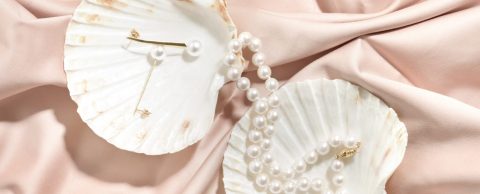
White pearl jewelry arranged on oyster shells and pink satin.

Pearl oysters are marine bivalve mollusks, not the same family as the edible true oysters most people know. Their mantle secretes shell material and, in nacre-producing species, can form a pearl around material within the mantle or other body tissue. For a broader introduction to pearls generally, see our About Pearls overview.

Key takeaways:

What Is a Bivalve?

A bivalve is a mollusk with a two-part, hinged shell. Depending on the species, a bivalve may have a mantle that lines and secretes the shell, gills used for both feeding and breathing, and a muscular foot or other structures used for movement or attachment. Anatomy varies meaningfully across species, so these structures shouldn’t be treated as identical across every bivalve. NOAA describes bivalves as a diverse group of about 9,200 species found across the world’s oceans.

Pearl Oysters vs. True Oysters

Pearl oysters belong to the family Pteriidae. The edible “true oysters” most people know from a raw bar belong to a different family, Ostreidae. Pearls can technically form in several mollusk groups, but commercial gem-pearl culture focuses on a specific set of species selected for their ability to produce fine nacre.

How Pearl Oysters Feed

Pearl oysters are suspension feeders. Water passes across their gills, which capture and sort tiny food particles before the mollusk expels the filtered water. Exact filtration rates vary by species, size and water conditions, so there’s no single universal number that applies to every pearl oyster.

The Mantle and Shell

The mantle is the tissue that lines the inside of the shell and secretes the material that builds it, layer by layer. In nacre-producing species, the mantle also deposits nacre—the same substance responsible for a pearl’s luster. Nacre is not sediment; it’s a biological material built from microscopic calcium-carbonate platelets and organic binder.

How Natural Pearls Form

Natural pearls form without human intervention. When material becomes enclosed within the mantle or other body tissue, the mollusk responds by depositing layers of nacre around it over time. The popular “grain of sand” story oversimplifies this process and isn’t the standard explanation used in gemology today.

How Cultured Pearls Form

Cultured pearls begin when a technician deliberately initiates the process—the mollusk then does the rest, depositing nacre the same way it would around any enclosed material. This is why cultured pearls are considered real pearls, not imitations: the difference is how the process begins, not whether a living mollusk produced the pearl. Our guide on how pearls are made covers the fuller formation process.

Bead-Nucleated Culture

A technician inserts a bead nucleus along with a small graft of donor mantle tissue. This is the common method for Akoya cultivation and many other saltwater cultured pearls, though methods vary by farm and species.

Tissue-Nucleated Culture

Many freshwater cultured pearls are initiated with a graft of mantle tissue alone, without a round bead nucleus. Practices vary across farms and regions, so not every cultured pearl follows the same process.

Why Not Every Oyster Produces a Gem Pearl

Whether an oyster produces a fine pearl depends on its biological response, species, health, environment, the culture method used, and simple variation in outcome. Quality and success rates differ considerably between farms and conditions—there’s no fixed percentage that applies universally across the industry.

Pearl Oyster Habitats and Farming

Pearl oysters are farmed in coastal marine waters suited to the species being cultivated. Farming involves ongoing husbandry: cleaning shells, monitoring water conditions, and caring for the mollusks throughout the culturing period. Specific lifespan, depth and water-temperature figures vary by species and region, so they shouldn’t be treated as universal standards. The Pearl Source’s overview of where pearls come from covers farming context across pearl types.

Environmental Context

Water quality and overall ecosystem health matter to pearl farming, and healthy farms generally depend on a healthy surrounding environment. That said, not every pearl farm automatically improves or restores its ecosystem—outcomes vary by operation, location and practice, and broad claims in either direction should be treated with caution.

Are Pearls Harmful to Oysters?

Cultured pearl production is a human intervention, and outcomes for the mollusks involved vary by method, species and farm practice. It isn’t accurate to claim that all oysters survive the process, that all oysters die from it, or to state as settled fact how oysters experience pain. This is an area where evidence is still developing, and it deserves a balanced answer rather than a romanticized or alarmist one.

Frequently Asked Questions

Are pearl oysters edible?

Some species may be consumed locally, but pearl oysters are distinct from the true oysters commonly farmed for food.

Does a grain of sand make a pearl?

Usually not, at least not in the simplified popular sense. Natural pearls are associated with material or injury within tissue; cultured pearls are deliberately initiated by a technician.

Can any mollusk make a pearl?

Many mollusks can form pearl-like concretions, but not all produce nacreous gem pearls, and commercial culture relies on a small number of selected species.

Are cultured pearls real?

Yes. They’re real pearls formed by a living mollusk after human initiation. Imitation pearls, by contrast, are manufactured products.

How long does a pearl take to form?

There’s no universal timeframe. It depends on the species, culture method, environment and the nacre quality being aimed for—treat any specific number you see elsewhere with a source and context in mind.

Final Takeaway

Pearl oysters are specialized bivalves whose mantle builds shell and, in nacre-producing species, can form pearls. Natural and cultured pearls differ in how the process begins—not in whether a living mollusk produced them.

Get Free Email Updates!

Signup now and receive an email once I publish new content.
I will never give away, trade or sell your email address. You can unsubscribe at any time.
August 11, 2026 - By Katie Muirhead
NEXT POST
prev post image Pearl Tooth Test: Does It Really Work?